

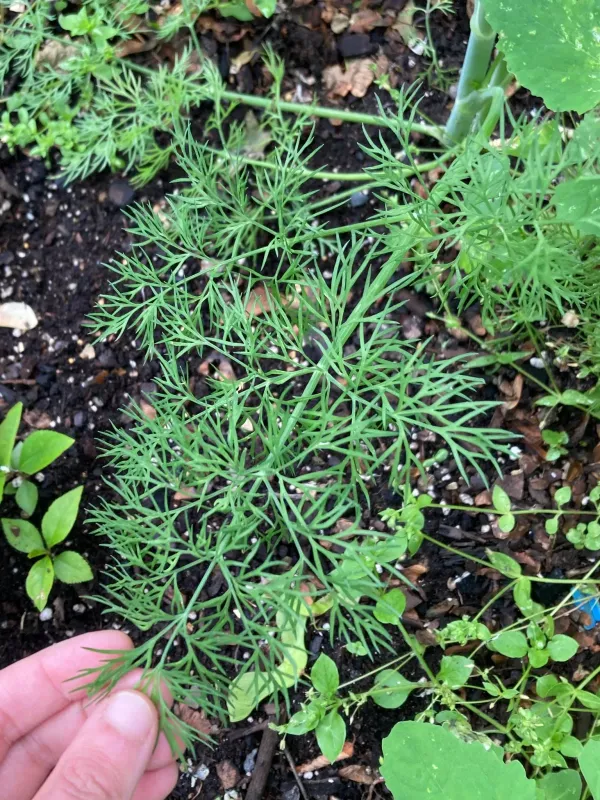
Description
Sowing dates
Dill (Anethum graveolens L.) is a member of the Apiaceae family. It is a hardy annual crop that germinates at temperatures as low as 3–5°C, though optimal development occurs between 15°C and 20°C.
Sowing in open fields should begin as soon as the soil is workable in early spring. For a continuous supply of fresh greens, it is recommended to sow seeds every two weeks throughout the growing season.
Late autumn or winter sowing can be performed just before the ground freezes. This dormant seeding allows the plants to emerge early in the spring, providing a head start on the growing cycle.
The seeding rate is typically 10–15 g per 10 square meters, with a planting depth of 1.5 to 2.5 cm. Soil should be firm enough to ensure good seed-to-soil contact for uniform germination.
Dill is highly photophilic and requires full sun exposure. Shady areas cause the plants to become leggy, pale, and less aromatic, significantly reducing the quality of the harvested produce.
Growing requirements
Dill thrives in fertile, well-draining, and loose soils with a neutral or slightly acidic pH. The best performance is observed when the crop follows plants that were heavily fertilized with organic matter.
Consistent soil moisture is crucial. Although dill is relatively drought-tolerant, water stress leads to rapid bolting, where the plant transitions from leaf production to flowering, ruining the harvest for greens.
Regular weeding and cultivation between rows are necessary to prevent crusting and ensure oxygen reaches the roots. In the early stages, young plants compete poorly with aggressive weeds.
Nitrogen is the most important nutrient during the vegetative stage, but excessive application should be avoided to prevent nitrate accumulation. Balanced compost is usually sufficient for healthy plant growth.
Proper air circulation is essential for the health of the planting. Overcrowded beds increase humidity around the leaves, which significantly promotes the development of fungal diseases.
Yield
Dill yield varies depending on the purpose of production: fresh herb production or seed production. For fresh greens, a yield of 1.5–2.5 kg per square meter is achievable under good management.
Cultivar selection plays a major role in total yield. Bush-type varieties are more productive and regenerate well after multiple cuttings, making them ideal for small-scale and intensive farming.
Slow-bolting varieties help maintain high quality for a longer harvest period, which is essential for commercial profitability. These varieties delay the transition to the flowering stage.
When grown for seeds, yields can reach 800–1200 kg per hectare. The crop must be harvested when the seeds reach the milky-ripe stage to ensure the highest concentration of essential oils.
The overall yield is highly dependent on climate conditions. High temperatures combined with long daylight hours often trigger early flowering, reducing the total mass of the harvestable green foliage.
Main diseases and pests
Powdery mildew is the most common fungal disease, characterized by white, powdery spots on leaves and stems. Management focuses on crop rotation and controlling excessive moisture.
Phoma leaf spot and Cercospora are also common threats. These diseases cause discoloration and necrosis of the leaf tissue, especially in regions with high humidity and poor ventilation.
Pests like the parsley worm (caterpillars of the swallowtail butterfly) and aphids can cause significant damage. Aphids drain the plant of juices, causing leaves to curl and stunt growth.
Chemical control is generally discouraged due to the short growing cycle of dill. Instead, integrated pest management (IPM) using biological sprays or natural remedies is the preferred approach.
Preventative measures, such as maintaining spatial distance from other umbellifers and using disease-free, high-quality seeds, are the foundation of effective crop protection.
Harvesting
The harvest of fresh greens begins 30–40 days after emergence, when the plant reaches 15–20 cm in height and has developed a lush rosette of leaves.
Harvesting is best done in the early morning. This timing ensures the plant is fully turgid, which improves both the quality of the product and its shelf life during transport and storage.
For culinary use in pickling, the whole plant, including the flower head (the "umbrella"), is harvested during the flowering stage while the seeds are soft and fragrant.
Post-harvest handling requires quick cooling. Fresh dill can be kept in cold storage at 1–3°C, or processed by drying or freezing, which effectively preserves the aromatic profile.
Exposure to sunlight after harvesting must be strictly avoided as it causes rapid wilting and oxidation of the essential oils, leading to a loss of the characteristic dill flavor.
Content graph
Connections · Dill
Most often together:
Nutrient elements
1 contact
Marketplace
Products · 18
