
Turkish hazel
Corylus colurna L.
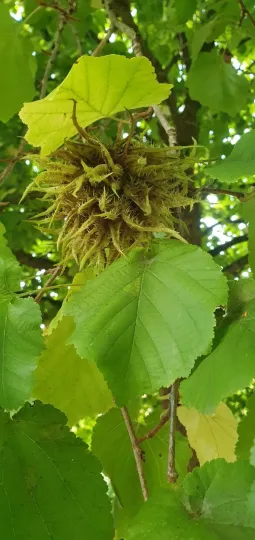
Description
Sowing dates
Propagation of the Turkish hazel is primarily done by seed, as this tree develops a deep taproot system. It is recommended to sow the seeds in the autumn, immediately after harvesting, allowing them to undergo natural stratification in the soil throughout the winter months.
For spring sowing, seeds require mandatory pre-treatment, which includes prolonged stratification at low temperatures for three to four months. The seeds should be planted at a depth of approximately 5–7 centimeters, depending on the soil structure and local climate conditions.
Seedlings emerge relatively late, so it is essential to keep the area free of weeds during the initial vegetation phase. In the first few years, seedlings grow slowly, focusing on root development, which makes them quite sensitive to the drying out of the topsoil layer.
The Turkish hazel is frequently used as a rootstock for cultivated hazelnut varieties, which helps prevent the formation of abundant root suckers. Grafting is typically performed in nurseries using budding or whip-and-tongue grafting methods, depending on the thickness of the rootstock.
Transplanting young trees to their permanent location should be planned for the early spring before active sap flow begins or in the autumn. It is crucial to preserve the integrity of the root ball, as the species is highly sensitive to damage to its taproot system.
Growing requirements
The Turkish hazel, belonging to the Betulaceae family, is a large deciduous tree that can reach heights of 20–25 meters. Unlike shrubby hazel species, it possesses a straight, slender trunk with corky bark, which adds significantly to its aesthetic value in landscaping.
The crop prefers deep, fertile loamy soils with good aeration and moderate moisture levels. The plant is quite demanding regarding calcium content in the soil, which is essential for vigorous growth and the formation of high-quality nuts in the future.
The Turkish hazel is noted for its high winter hardiness and ability to withstand severe frosts, making it suitable for cultivation in temperate climates. Despite its hardiness, young specimens require protection from drying spring winds during their first few years of growth.
This tree is light-demanding, so sunny locations protected from strong drafts should be chosen for commercial plantings. In conditions of insufficient lighting, the crown becomes sparse, and the tree's overall nut productivity is significantly reduced.
Maintenance of mature trees is minimal, focusing on occasional watering during prolonged drought and sanitary pruning of the crown. The species is highly resistant to urban conditions, air pollution, and dust, making it a popular choice for planting in parks and public areas.
Yield
The economic value of the Turkish hazel lies both in the harvest of its nuts and the use of its high-quality timber. While the nuts are similar in taste and nutritional profile to hazelnuts, they possess a much thicker and harder shell.
Trees enter their active bearing phase relatively late, usually between 8 and 10 years after being planted in a permanent location. A mature tree can yield between 10 and 20 kilograms of nuts annually, depending on its age and growing conditions.
The nuts grow in clusters of 3 to 8, surrounded by a densely pubescent involucre that dries as the fruit matures. Stable yields are achieved when other trees are present nearby to ensure effective cross-pollination of the blossoms.
A major agricultural benefit of the Turkish hazel is its use as a premium rootstock for commercial hazelnut varieties. Trees grafted onto this rootstock are long-lived, do not produce root suckers, and show increased resistance to various environmental stresses.
The timber of the Turkish hazel is highly valued in woodworking for its hardness, beautiful grain, and light pinkish hue. It is easy to work with and takes a polish well, making it a desirable material for high-end furniture manufacturing.
Main diseases and pests
Major biological threats include the nut weevil, which damages the kernels, and certain aphid species that feed on young foliage. Integrated pest management, including biological controls and timely insecticide applications during bud burst, is recommended to manage these populations.
Fungal diseases such as leaf spot or powdery mildew can affect the tree in high-humidity conditions with poor crown ventilation. Preventive measures include regular pruning to improve airflow and the removal of fallen leaves, where pathogens often overwinter.
Bacterial infections of the trunk are rare but require immediate removal of infected branches and strict disinfection of pruning tools. Preventing mechanical damage to the bark is crucial, as wounds can serve as entry points for various secondary infections.
Nutrient deficiencies in the soil may lead to leaf chlorosis, which can be corrected by applying balanced fertilizers containing essential micronutrients like iron and magnesium. Regular monitoring helps detect problems early and prevents widespread damage.
Abiotic stresses, such as rapid temperature fluctuations in late winter, can cause frost cracks on the trunks. Whitewashing the trunks with lime is a recommended practice to protect the bark from sunscald and overheating during the late winter months.
Harvesting
The harvest season for Turkish hazel begins in late August or September, when the involucres turn yellow and start to dry out. It is important not to delay the process, as the nuts may fall to the ground, which complicates collection and degrades the quality of the product.
Manual harvesting involves using long poles to shake the nuts onto prepared tarps spread beneath the tree canopy. Mechanical harvesting is feasible with specialized equipment designed for nut crops, which utilizes vibration to dislodge the nuts from the branches.
After collection, the nuts must be husked and thoroughly dried in well-ventilated areas or industrial dryers. To ensure long-term storage viability, the moisture content of the kernels should be reduced to approximately 10–12 percent.
Storage should take place in cool, dry conditions using breathable bags or wooden crates to ensure constant air circulation. If kept at a temperature between 5 and 10 degrees Celsius, the nuts retain their flavor and quality until the next season.
Sorting and calibration by size are standard procedures before the product hits the market or enters the processing phase. Utilizing quality cracking equipment allows for efficient processing and adds significant value to the final output of the orchard.