
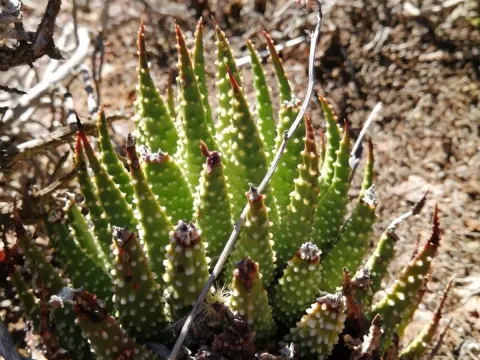
Tulista
Tulista Raf.
Tulista is a genus of succulent perennial plants belonging to the Asphodelaceae family. Originally classified under the genus Haworthia, these plants were reclassified as Tulista due to their distinct floral morphology and leaf structural characteristics.
What the section contains

Tulista
Native to the arid regions of South Africa, these succulents are evolutionarily adapted to harsh environments. They thrive in rocky habitats where they can access mineral-rich soils and survive prolonged periods of drought by storing water in their thickened, fleshy leaves.
In cultivation, Tulista requires bright, indirect sunlight to maintain its compact rosette form. While they are highly resilient, intense midday sun can cause the foliage to stress, resulting in deep pigments or necrotic spots that diminish their aesthetic value.
The substrate must be highly porous to ensure efficient drainage. A standard mix should consist of coarse sand, pumice, and a small portion of organic matter. This structure prevents the roots from sitting in damp soil, which is the most common cause of failure in succulent gardening.
Temperature management is critical for the developmental cycle. During the growing season, temperatures should range between 20°C and 25°C. A distinct dormant period during winter, with temperatures lowered to approximately 10-15°C, is essential to stimulate proper physiological recovery.
Root rot, induced by overwatering and poor aeration, remains the primary threat to Tulista. The root system is extremely susceptible to fungal pathogens if the soil remains wet for extended periods, making the 'soak and dry' method of irrigation mandatory.
Pest infestations such as mealybugs often occur in leaf axils, where they are difficult to spot until a significant colony has formed. These pests feed on the plant's sap and can leave the tissue vulnerable to secondary viral or fungal infections.
Scale insects can also infest the outer surfaces of the leaves. Manual removal using a soft brush dipped in isopropyl alcohol is an effective control measure for localized infestations, avoiding the need for heavy chemical intervention.
Fungal leaf spots are frequently associated with poor ventilation and high humidity. Maintaining clean growing conditions and ensuring adequate spacing between plants allows for better air circulation and reduces the risk of moisture accumulation.
Regular inspection and consistent monitoring are the cornerstones of successful care. By maintaining a clean environment and adhering to the natural cycle of the plant, you can prevent most common ailments and support long-term vigor in your succulent collection.