
Tulista pumila
Tulista pumila (L.) G. D. Rowley
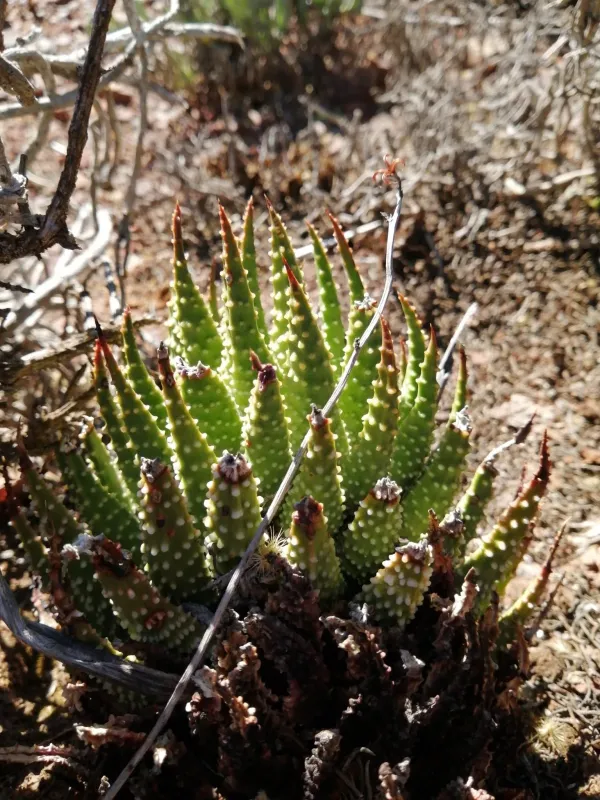
Description
Sowing dates
Propagation of Tulista pumila from seeds is best performed in spring to ensure sufficient natural light. Seeds should be sown in a porous substrate composed of sand and perlite.
Optimal germination occurs at temperatures between 20–25 degrees Celsius. Humidity must be kept stable with occasional ventilation to prevent mold development during the early growth stages.
Vegetative propagation via offsets is the preferred method for maintaining genetic consistency. Carefully remove the pups once they have developed a small root system of their own.
Young plants should be kept away from direct heat sources to prevent desiccation. Gradual acclimation to increased light levels is necessary for healthy leaf development and pigmentation.
The transition to an individual pot should be done when the plantlet is large enough to handle, ensuring the new soil mix mirrors the adult plant’s requirements for aeration.
Growing requirements
Tulista pumila, a member of the Asphodelaceae family, originates from the Cape region of South Africa. It is a slow-growing succulent that thrives in rugged, rocky environments.
This species requires bright, indirect sunlight to maintain its compact rosette form. Excessive shade will cause the plant to etiolate and lose its characteristic tubercles.
Soil requirements focus on extreme drainage. Use a commercial cactus mix amended with coarse inorganic materials such as pumice, lava rock, or expanded clay pebbles.
Watering must follow the soak-and-dry method. During the active growing season, water only when the growing medium has dried out completely throughout the entire depth of the pot.
A dormant period during winter is essential. Reduced temperatures and minimal watering trigger the plant's natural rhythm and prepare it for the following season's growth.
Main diseases and pests
Root rot is the most frequent fatal condition for Tulista pumila. It is almost exclusively caused by overwatering or the use of heavy, water-retentive potting soils.
Mealybugs are common pests that hide between the succulent leaves. These insects feed on plant sap and can be managed using systemic insecticides or isopropyl alcohol swabs.
Spider mites can become a nuisance if the plant is kept in extremely dry, stagnant air. Increasing airflow around the plant helps mitigate this risk significantly.
Fungal infections can manifest as black spots on the leaves. Immediate removal of affected tissue and the application of an appropriate fungicide can save the specimen.
Regular sanitation of tools and pots is a critical part of the plant care routine to prevent the spread of bacterial or fungal pathogens throughout your collection.