
Tulbaghia violacea
Tulbaghia violacea x Tulbaghia cominsii
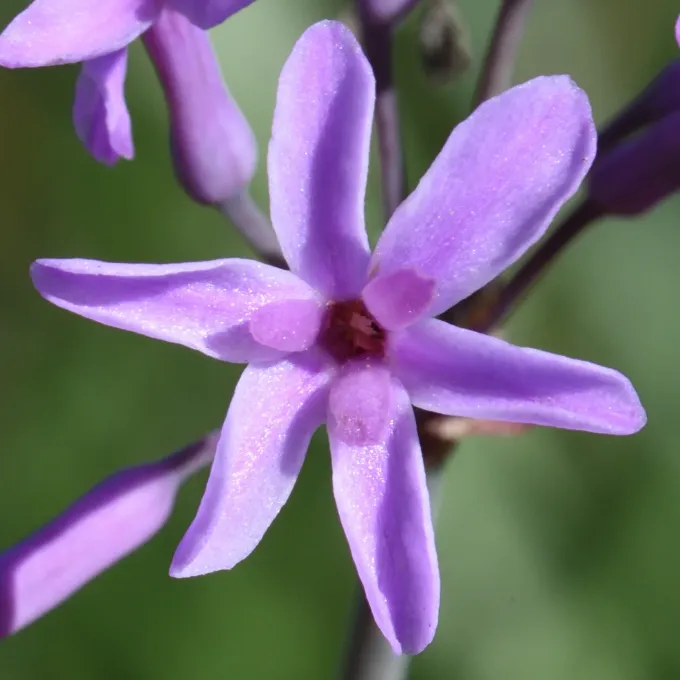
Description
Sowing dates
Tulbaghia violacea (Tulbaghia violacea x Tulbaghia cominsii) is a member of the Amaryllidaceae family. The most common method of propagation is the vegetative division of rhizomes during the early spring season.
When grown from seeds, sowing should be done in a greenhouse in late winter. Seeds require a period of stratification to improve germination rates and should be sown in a well-draining, nutrient-rich soil mix.
Seedlings should be pricked out when the first true leaves emerge. They require bright, indirect light to develop a robust root system and prevent the stems from becoming thin and weak.
Planting in the field occurs once the danger of frost has passed. Care should be taken during transplantation, as the root system is sensitive and can be easily damaged by rough handling.
Maintaining a spacing of approximately 30 cm between plants is recommended. This allows for proper air circulation and gives the clumps enough space to expand as they mature.
Growing requirements
This crop thrives in sunny locations with full exposure to light. While it can tolerate partial shade, full sun is necessary to ensure vigorous flowering and the most intense leaf coloration.
Well-draining, fertile soil is critical for the success of Tulbaghia. It does not tolerate waterlogging, so planting on raised beds or adding coarse sand to heavy soil is highly beneficial.
The optimal pH range for this plant is neutral to slightly acidic. Providing a light application of balanced fertilizer during the growing season will help support leaf production and flower development.
Tulbaghia is sensitive to cold temperatures. In regions with harsh winters, it is best to mulch the base heavily or dig up the rhizomes and store them in a cool, frost-free environment until spring.
While the plant shows good drought tolerance, regular watering during the active growing season will significantly improve the quality and yield of the foliage and flowers.
Main diseases and pests
Tulbaghia is naturally resistant to many pests due to its high concentration of sulfur-based compounds, which give it a garlic-like scent that repels aphids, mites, and even small rodents.
The primary threat to this plant is root rot caused by poor soil drainage. Ensuring that the site is not prone to water accumulation is the most effective preventative measure for disease control.
In humid or stagnant air conditions, plants may occasionally be susceptible to powdery mildew. Ensuring proper spacing and airflow between individual plants is key to preventing this fungal infection.
Slugs and snails may sometimes feed on fresh growth in spring. Physical barriers or eco-friendly bait can be used to protect young plants during their most vulnerable stage of development.
Overall, Tulbaghia is a remarkably low-maintenance and healthy plant, often serving as a natural pest deterrent in diverse garden settings or agricultural systems.
Harvesting
Both the leaves and flowers of Tulbaghia are edible and serve as a culinary herb with a distinctive garlic flavor. Harvesting can occur continuously throughout the growing season as needed.
It is recommended to harvest younger, tender leaves for the best texture and flavor. Stems should be cut cleanly at the base to allow for rapid regeneration of the plant.
Freshly harvested produce should be stored in a cool, humid environment to prevent wilting. Refrigeration is ideal for keeping the leaves fresh for several days after harvesting.
The violet flowers are a decorative addition to salads and appetizers. They should be picked in the morning once the dew has evaporated but before the heat of the day reaches its peak.
For longer-term preservation, the leaves can be frozen. Drying is also an option, though much of the delicate essential oil profile and pungent aroma will be reduced during the drying process.