
Triplaris weigeltiana
Triplaris weigeltiana
Description
Growing requirements
Triplaris weigeltiana is a prominent member of the Polygonaceae family, native to the tropical regions of South America. This fast-growing tree species is well-adapted to the high-humidity environments of neotropical forests.
The ideal cultivation requirements include deep, well-drained, and nutrient-rich soils. While the species is resilient, it thrives best in areas with consistent tropical rainfall and significant exposure to sunlight, which stimulates its rapid biomass production.
Climate adaptation for this species requires avoiding frost and extreme temperature fluctuations. In its natural range, it occupies forest clearings and riverbanks, where it competes effectively with other pioneer species for available nutrients.
Agronomic practices focus on early establishment, ensuring that young seedlings are protected from heavy weed competition. Proper spacing is essential to ensure that every individual tree receives enough air circulation and light exposure.
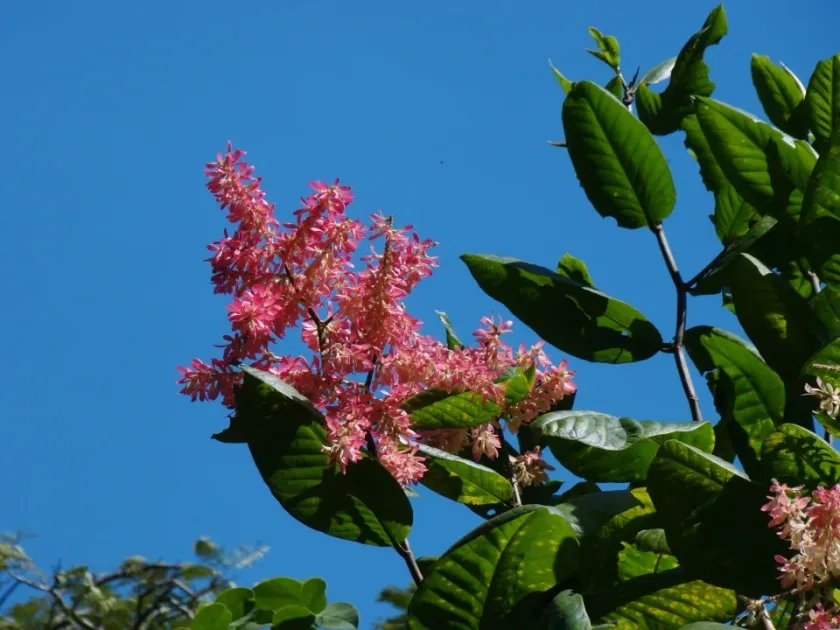
Botanically, the species is dioecious, meaning male and female flowers grow on separate individuals. The female trees are particularly striking due to their large, colorful, persistent sepals that provide a decorative appearance after flowering.
Main diseases and pests
A fascinating aspect of Triplaris weigeltiana is its obligate symbiosis with ants. The hollow stems provide nesting sites for these insects, which in turn aggressively defend the tree against herbivores and leaf-eating pests.
Because of this biological security system, the tree rarely requires chemical pest control. The ants efficiently manage the population of potential insect threats, making the species highly sustainable for low-input forestry.
Potential threats include fungal pathogens that may infect the tree if the stems are physically damaged or if the soil drainage is inadequate. Root rot can become a significant issue in waterlogged conditions, leading to tree mortality.
Competition from invasive vines and epiphytes is the most common external threat during the developmental phase. Clearing the immediate area around the saplings is a standard practice to allow the tree to establish its canopy quickly.
To ensure tree health, it is essential to monitor for physical damage to the bark. Any wounds can serve as entry points for fungi, thus requiring immediate pruning of affected limbs to prevent the spread of disease.