
Trinia multicaulis
Trinia multicaulis
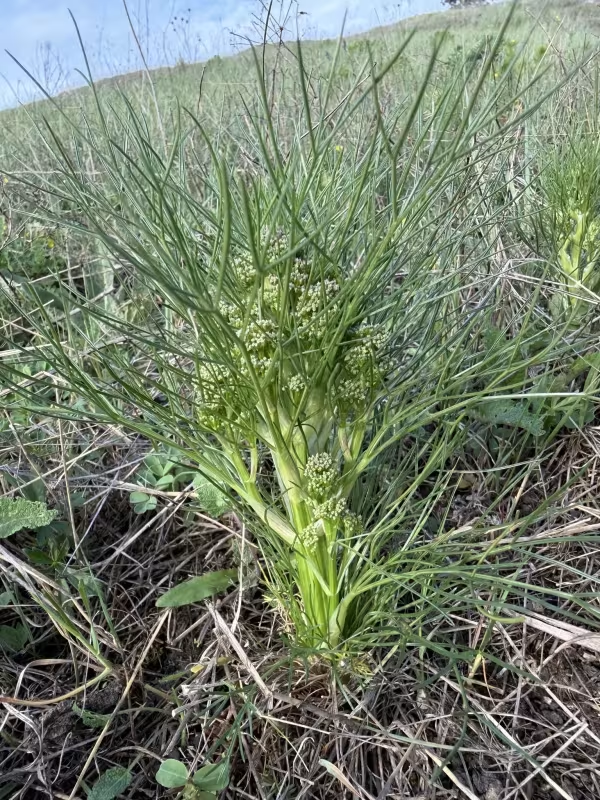
Description
Growing requirements
Trinia multicaulis is a perennial herbaceous plant belonging to the Apiaceae family. It is typically found in arid steppe regions, limestone slopes, and rocky grasslands, where it has evolved to thrive in challenging environments characterized by limited moisture and high exposure.
The primary environmental requirement for this species is excellent soil drainage. It prefers light, stony, or sandy substrates and will not tolerate waterlogging, which often leads to root rot and rapid decline of the plant population in inappropriate soil conditions.
Climate adaptability is a defining feature of this species. It demands full sun exposure and warm temperatures, exhibiting high tolerance to drought and heat stress. These characteristics make it a robust candidate for ecological restoration projects in semi-arid and arid agricultural zones.
Botanically, the plant is recognized by its multiple stems arising from a common crown and its deeply dissected, fine foliage. This morphology minimizes transpiration, allowing the plant to maintain metabolic processes even during peak summer heat in its natural habitat.
From an agricultural standpoint, Trinia multicaulis is utilized primarily for land reclamation and soil stabilization on slopes. While it is not a traditional mass-produced crop, its resilience makes it a valuable subject for research into developing low-maintenance, drought-resistant forage cover for sustainable pastoral management.