
Honewort
Trinia glauca
Description
Growing requirements
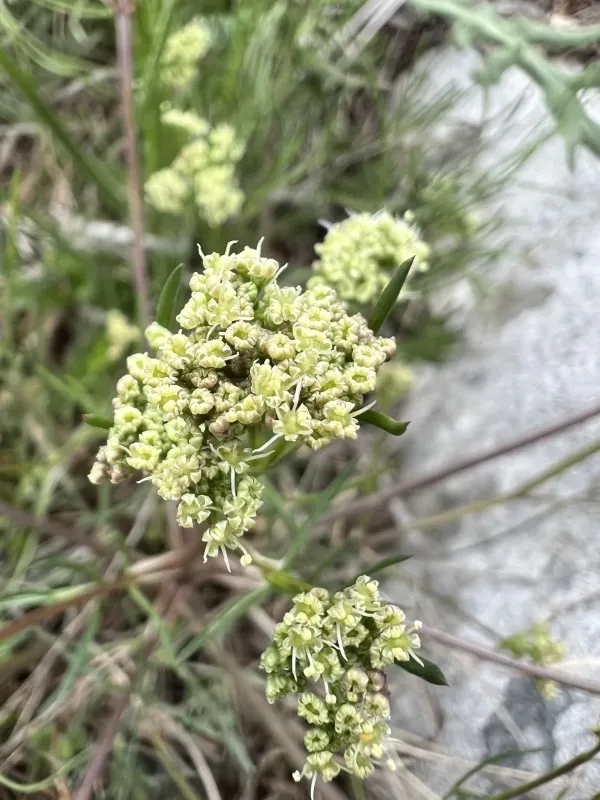
Trinia glauca, commonly known as honewort, is a distinctive perennial herb belonging to the Apiaceae family. It is recognized by its glaucous, finely divided foliage and its adaptation to harsh, dry environments.
This species is native to European steppes and rocky grasslands. It thrives in well-drained, calcareous soils that provide the mineral stability necessary for its slow-growing, deep-rooted system.
The plant demonstrates exceptional drought tolerance and requires high levels of sun exposure to reach maturity. It is unsuitable for wetland cultivation as it strictly requires well-aerated soil conditions.
Botanically, Trinia glauca is dioecious, meaning the male and female flowers appear on separate individual plants. This reproductive strategy is an adaptation to ensure genetic diversity in sparse populations.
In landscaping, it is used primarily in xeriscaping or rock gardens where its unique texture and resistance to harsh climates offer significant aesthetic and low-maintenance value.
Main diseases and pests
The primary threat to the health of this plant is waterlogging, which rapidly leads to root rot and fungal colonization of the underground organs, proving fatal for the specimen.
Pests such as aphids are known to target the succulent growth during the flowering phase, potentially reducing seed production and overall plant vigor if not controlled.
Habitat loss due to intensive agricultural development and urban sprawl remains the most significant threat to the long-term survival of wild populations of this species.
During the vegetative stage, the plant may suffer from foliage-damaging insects that thrive in dry, warm conditions characteristic of the plant's natural distribution range.
Proper management requires maintaining adequate spacing between plants to ensure good air circulation, which helps to minimize the incidence of airborne fungal spores and pathogen spread.