
Trimezia lutea
Trimezia lutea
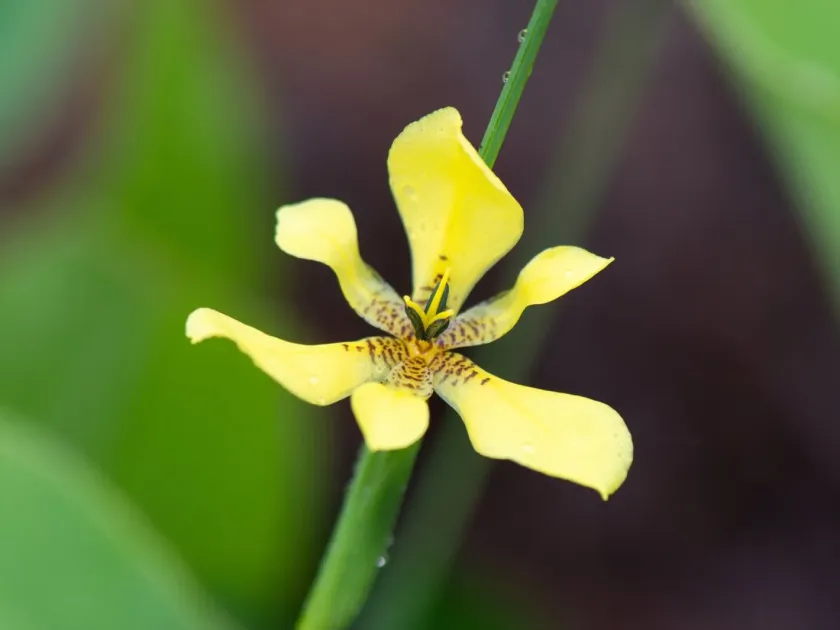
Description
Sowing dates
Trimezia lutea is primarily propagated vegetatively through offsets or bulbils that develop at the base of the parent plant.
Planting the bulbs into prepared soil is best performed in early spring once the risk of frost has passed and temperatures are stable.
When starting from seeds, use a well-draining seed-starting mix and maintain consistent warmth to encourage successful germination.
Seeds should be sown at a depth of about 1 centimeter, ensuring the soil remains moist but never waterlogged during the initial growth phase.
Young plants should be spaced at least 25 centimeters apart to allow for proper air circulation and root development as the plant matures.
Growing requirements
This species is a member of the Iridaceae family and thrives best in locations that provide plenty of bright, indirect sunlight.
The ideal growing medium is a fertile, well-draining loam that allows excess moisture to escape easily from the root zone.
Regular watering is necessary during the active growing season, but the soil should be allowed to dry slightly between irrigation sessions.
Trimezia lutea prefers moderate temperatures and is sensitive to extreme cold, requiring winter protection or indoor storage in cooler climates.
Applying a balanced liquid fertilizer during the peak growing phase will support lush foliage growth and the development of attractive yellow flowers.
Main diseases and pests
The primary concern for Trimezia lutea is root rot caused by poor soil drainage and excessive moisture accumulation in the planting bed.
Fungal leaf spots can also occur if the humidity levels are too high and the plant is not provided with adequate ventilation.
Pests such as spider mites and thrips may infest the foliage, particularly if the plant is grown in overly dry indoor or greenhouse conditions.
Monitoring the undersides of the leaves regularly helps in identifying early pest infestations before they spread across the entire collection.
Cultural control methods, such as removing dead foliage and avoiding overhead irrigation, are essential to maintain overall plant health.
Harvesting
Harvesting bulbs for overwintering should be done in late autumn after the foliage has naturally withered and turned yellow.
Carefully lift the bulbs from the soil, ensuring that the roots remain intact to provide the necessary energy reserves for the following season.
Clean the harvested bulbs gently, removing any remaining soil, and allow them to air-dry in a cool, shaded area for several days.
Store the bulbs in mesh bags or trays filled with dry peat to protect them from dehydration while preventing fungal growth.
Keep the storage area at a consistent cool temperature, checking periodically to ensure the bulbs remain firm and free of decay.