
Trichodiadema densum
Trichodiadema densum
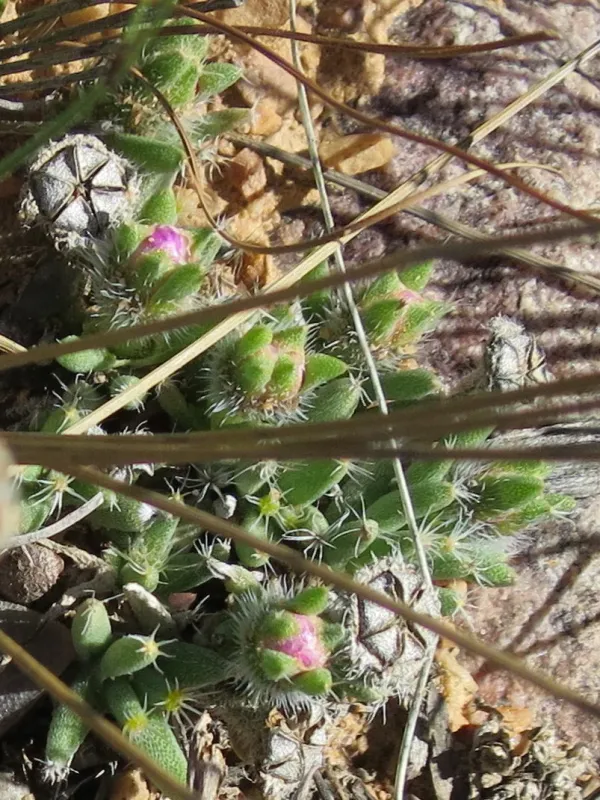
Description
Sowing dates
Propagation of Trichodiadema densum is primarily achieved through stem cuttings, which is the most reliable method for maintaining the characteristics of the parent plant.
The best time to take cuttings is during the spring or early summer months, coinciding with the plant's natural peak growth period.
After taking the cuttings, it is crucial to allow them to callous for several days in a dry, shaded area before placing them into the growing medium.
A well-draining succulent mix, typically consisting of pumice, coarse sand, and a small amount of potting soil, is necessary for successful root development.
The cuttings should be placed in bright, indirect light, keeping the substrate only slightly damp until new root growth is confirmed.
Growing requirements
This species belongs to the Aizoaceae family and originates from the arid regions of South Africa, where it has evolved to thrive in nutrient-poor, rocky soil.
It requires a high intensity of direct sunlight to maintain its compact growth form and to stimulate the production of its signature delicate flowers.
The plant possesses a thickened root structure known as a caudex, which allows it to store water, making it highly drought-tolerant in its native habitat.
During the winter dormancy period, temperatures should be kept cool to encourage a rest period, which is essential for future flowering success.
Good air circulation is vital to simulate its natural environment and to prevent the build-up of excess humidity around the foliage and caudex.
Main diseases and pests
Root rot is the most significant threat to the health of the plant, almost always caused by waterlogged soil and insufficient drying time between waterings.
Mealybugs are the most common pests found on this plant, often hiding in the dense foliage or within the tiny leaf structures, making them hard to spot.
Scale insects can also infest the stems, weakening the plant by sucking sap, which may lead to secondary infections and stunted growth.
- Root rot from overwatering.
- Mealybug infestations in leaf axils.
- Fungal infections caused by poor ventilation.
Regular inspection of the plant's crown and root zone is recommended, using systemic insecticides if pests are detected or fungicides for soil-borne pathogens.