
Trichodiadema barbatum
Trichodiadema barbatum
Description
Growing requirements
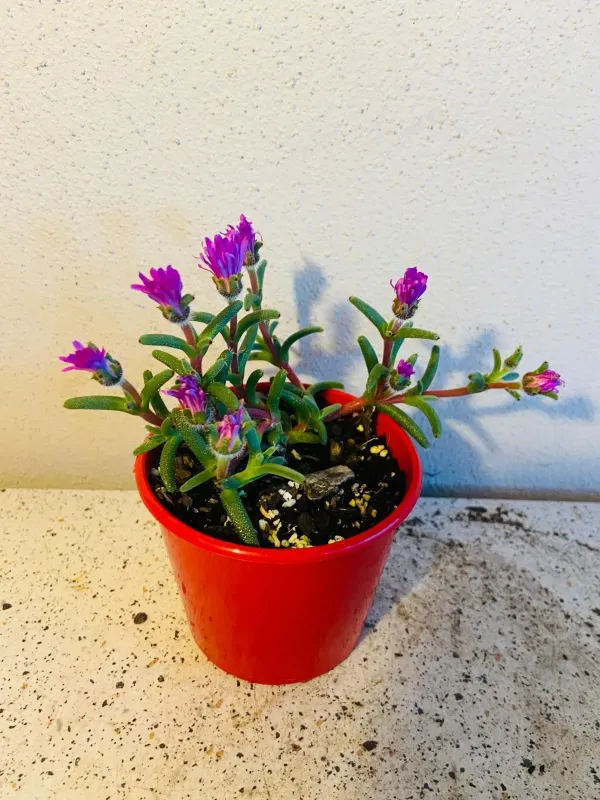
Trichodiadema barbatum is a fascinating succulent species belonging to the Aizoaceae family. Native to the arid regions of South Africa, it has evolved to thrive in harsh environments, utilizing its enlarged tuberous root system to store essential water reserves.
The plant is botanically recognized by its cylindrical leaves tipped with characteristic clusters of white bristles. These "beard-like" structures are a key evolutionary feature, helping the plant cope with intense sunlight and reduce transpiration in its native desert habitat.
Cultivation of this species requires high levels of bright, direct sunlight. When grown indoors, it should be placed in the sunniest possible location to maintain a compact growth habit and ensure the plant remains robust rather than stretching for light.
A well-draining, mineral-based substrate is critical for the health of Trichodiadema barbatum. A mixture of grit, coarse sand, and perlite is recommended, as it prevents moisture retention and promotes the health of the sensitive root system.
The watering regime must be strictly controlled, allowing the soil to dry out completely between sessions. During the winter dormant period, watering should be significantly reduced or stopped entirely to mimic the dry season of its native climate.
Main diseases and pests
The most common threat to this succulent is root rot caused by overwatering or poor drainage. Once rot begins, it spreads rapidly through the fleshy tissues, making early detection and immediate adjustment of moisture levels vital.
Mealybugs are the primary pests that frequently infest this species, often settling within the leaf axils or among the protective bristles. Regular inspections are necessary to detect early infestations before they spread to other plants.
Spider mites may also appear in conditions where the air is excessively dry and stagnant. Maintaining good air circulation is a simple yet effective strategy to reduce the risk of mite colonization and general plant stress.
Fungal infections can also occur if the humidity levels are too high or if water is left sitting on the foliage for extended periods. It is highly recommended to avoid overhead watering and keep the foliage dry.
Using sterile soil components during propagation or repotting helps mitigate the risk of soil-borne pathogens. Healthy plants that are grown in optimal light conditions are naturally more resistant to pest attacks and diseases.