
Rough poison peach
Trema aspera
Description
Growing requirements
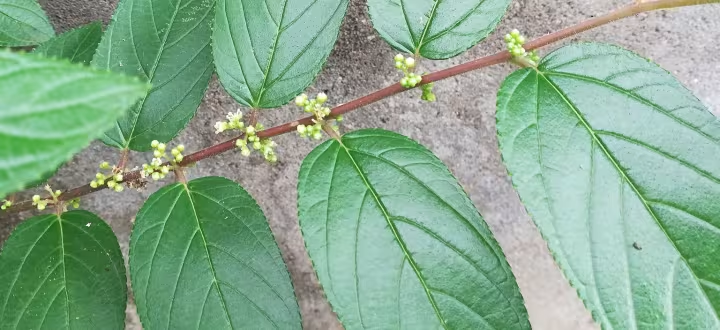
Trema aspera, commonly known as the rough poison peach, is a perennial evergreen shrub or small tree belonging to the Cannabaceae family. It is native to eastern and northern Australia.
The plant thrives in well-draining soils with a neutral to slightly acidic pH. It performs best in locations that provide plenty of sunlight or light shade during the day.
It is known for its ecological resilience, capable of establishing itself in various soil types, including rocky or disturbed ground, which makes it an excellent pioneer species.
Climate requirements include warm temperatures, as the plant is susceptible to cold damage and cannot survive severe frosts in temperate climates.
Proper site preparation is essential to ensure that the root system develops correctly, as the plant is sensitive to waterlogged environments.
Yield
The bark of Trema aspera is recognized for its high-quality fiber, which has been utilized in traditional crafts and has potential for modern industrial applications.
The leaves and fruits contain various chemical compounds that are currently being studied for their potential pharmaceutical applications in herbal medicine.
As a woody crop, it provides excellent shelter for native fauna, particularly birds that feed on its small fruit, making it a valuable plant for ecological restoration projects.
- Extraction of strong plant fibers.
- Source of bioactive compounds for research.
- Contribution to soil stabilization and erosion control.
The wood, while light, has been historically used for small-scale carpentry and crafting purposes due to its texture and availability.
Main diseases and pests
Fungal diseases are the primary threat, especially in humid conditions where air circulation around the canopy is restricted.
Pests such as aphids and spider mites can infest young foliage, which may result in reduced growth rates and damage to the plant's structural integrity.
Root rot is a common issue caused by poor drainage, leading to the rapid decline of the plant if soil conditions are not properly managed.
Insect larvae may cause localized damage to the leaves; however, healthy plants are often able to recover with minimal intervention.
Integrated pest management strategies are recommended to maintain the health of the cultivation and ensure consistent biomass production.