
Trema angustifolium
Trema angustifolium
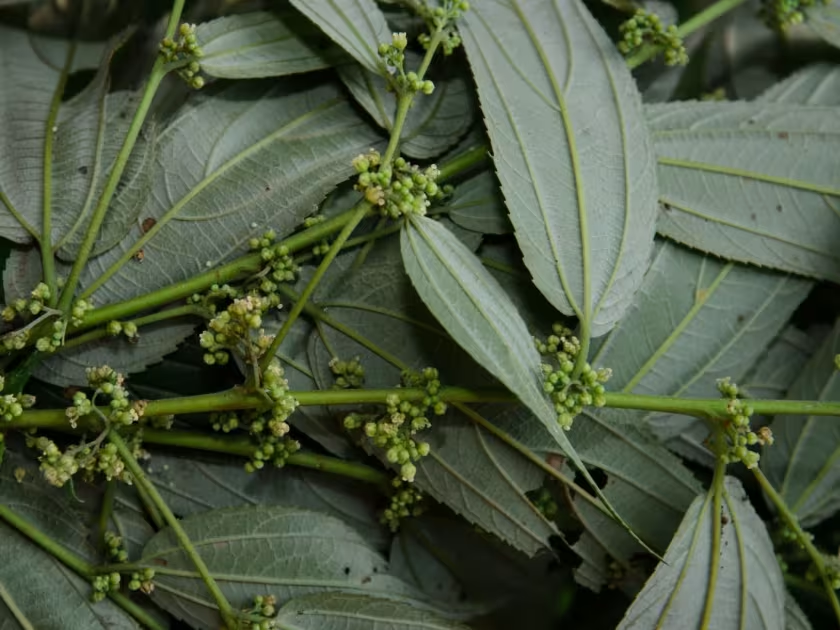
Description
Sowing dates
Trema angustifolium is a fast-growing tree species within the Cannabaceae family. Sowing in nurseries is generally conducted in early spring, once the threat of frost has passed, ensuring an optimal long growing season.
For direct field planting, the soil must be prepared through deep loosening to ensure adequate aeration for the root system. Seeds exhibit high germination rates under controlled temperatures ranging from 20 to 25 degrees Celsius.
Plantation density is critical for yield, and a row-based planting scheme is typically used to facilitate mechanical maintenance and weeding. Proper spacing provides each seedling with the necessary resources for rapid early development.
Seed pretreatment or stratification may be required to break dormancy and ensure uniform germination. High-quality seeds are essential for establishing a productive stand and reducing the need for replanting gaps.
Irrigation immediately after sowing is vital for ensuring seedling establishment. While the plant is drought-tolerant once mature, consistent moisture during the first few weeks is essential for survival and initial growth.
Growing requirements
The plant thrives in sunny, open locations and has high light requirements. Trema angustifolium prefers fertile, well-drained loamy soils with a neutral or slightly acidic pH level for optimal nutrient uptake.
Ideal climate conditions are found in subtropical and tropical zones with high humidity. The species is sensitive to prolonged sub-zero temperatures, limiting commercial cultivation to regions without severe winters.
Agricultural management includes regular nitrogen application during the first years of growth to stimulate biomass production. Nutritional requirements decrease as the tree reaches maturity and establishes a robust root network.
The tree shows excellent regenerative properties following pruning, allowing for intensive cultivation methods. Regular sanitary pruning helps in forming a straight trunk, which significantly improves the commercial value of the timber.
Waterlogged soils must be avoided as excess moisture near the roots leads to decay. Ideally, the water table should remain at least 1.5 meters below the soil surface to prevent root stress.
Yield
The economic value of Trema angustifolium lies in its exceptionally rapid growth rate. Under favorable conditions, the biomass increment can reach several meters in height within a single growing season.
It is highly suitable for the pulp and paper industry, where the volume of wood accumulation per hectare is a key financial metric. The harvesting cycle for intensive plantations can be as short as a few years.
The wood is lightweight yet durable, making it useful for plywood, light crates, and building materials. Its biological productivity is among the highest for broad-leaved fast-growing tree species.
In addition to timber, the foliage provides significant organic matter, which can be utilized as green manure after processing. The overall biological output remains consistent throughout the plant's productive life cycle.
Plantation efficiency depends on spacing: denser stands produce more small-diameter poles, while wider spacing encourages faster trunk diameter expansion, suited for different industrial requirements.
Main diseases and pests
Leaf-eating insects are the primary pests, particularly during the early stages of growth when the foliage is soft. Biological insecticides are recommended for managing large infestations of caterpillars.
Fungal diseases like powdery mildew may affect the foliage under conditions of poor ventilation or high humidity. Proper site selection and appropriate tree spacing are the best preventive measures.
Root rot is a risk in areas with poor drainage, necessitating close monitoring of moisture levels. Any affected plants should be removed immediately to prevent the spread of decay to the rest of the plantation.
Aphids and other sucking insects can cause secondary damage by transmitting viral diseases that reduce growth rates. Regular canopy inspections are essential for early detection and mitigation of potential threats.
- Maintain a consistent weeding schedule during the establishment phase.
- Ensure good airflow by controlling planting density.
- Use sterile tools when pruning to minimize entry points for pathogens.
Harvesting
Technical maturity of Trema angustifolium wood is reached quickly, allowing for flexible harvest scheduling. The timing of the harvest is determined by the intended use, such as firewood, pulp, or timber.
Clean cuts are essential when harvesting to prevent damage to the bark and potential infection sites. The species has a strong tendency to coppice, which simplifies the process of re-establishing the plantation after harvest.
Timber should be removed from the site promptly to minimize the risk of pest colonization in the fresh debris. Natural seasoning should be conducted in shaded, dry areas to maintain wood quality.
Modern forestry machinery improves harvesting efficiency and worker safety. Given the relatively thin bark of the tree, extra care must be taken during the transport phase to avoid mechanical surface damage.
While harvesting can be done throughout the year, the dormant season is often preferred to protect the rootstocks and soil structure, ensuring that subsequent regrowth is vigorous and healthy.