
Trailing ice plant
Lampranthus spectabilis (Haw.) N. E. Br.
Description
Growing requirements
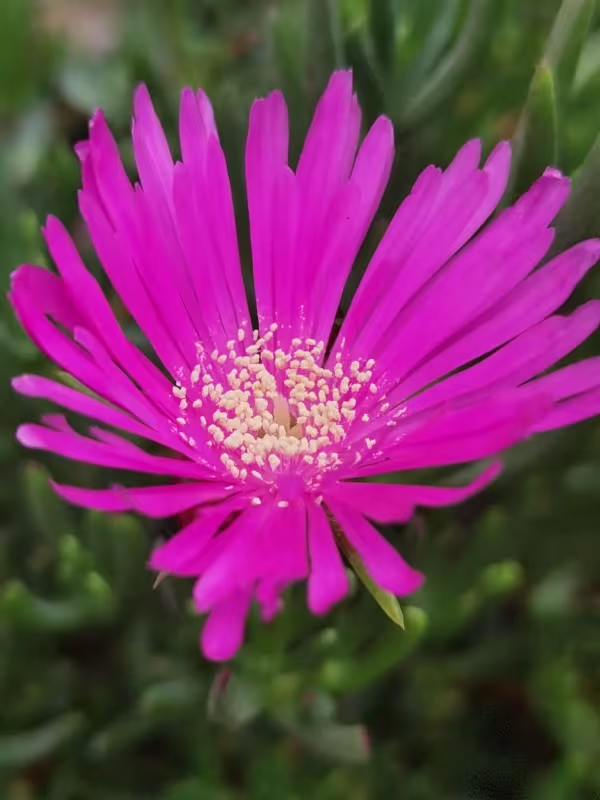
Trailing ice plant is a succulent perennial belonging to the Aizoaceae family. Native to South Africa, it is widely valued in horticulture for its vibrant, daisy-like flowers and its ability to act as a drought-tolerant ground cover.
The plant features fleshy, succulent leaves that adapt perfectly to arid climates. It grows as a low-spreading subshrub, typically reaching a height of 20 to 30 centimeters, which makes it an ideal choice for rock gardens and slopes.
Success in cultivating this species depends heavily on sunlight exposure. It requires full sun for most of the day to trigger the blooming cycle, as the flowers will remain closed in shady or overcast conditions.
Regarding soil, drainage is the absolute priority. The plant thrives in sandy or gritty, well-draining soil mixes that mimic its natural habitat. It cannot tolerate heavy, water-logged clays that suffocate the root system.
Temperature management is also essential. Being a tropical succulent, it is not frost-hardy and must be protected from temperatures below freezing. In colder regions, it is best treated as a seasonal plant or kept in pots that can be moved indoors during winter.
Main diseases and pests
Root rot is the most serious threat to Trailing ice plant. It is primarily caused by overwatering or soil that does not drain well enough, leading to rapid tissue decay and eventual plant death.
Mealybugs are common pests that tend to hide in the tight junctions between the succulent leaves. Monitoring for these small white cottony masses is important, as they can quickly weaken the plant by sucking its sap.
Spider mites may become an issue if the ambient air is kept too hot and dry without proper circulation. These tiny pests weave delicate webs and cause foliage to appear speckled or discolored.
Aphids occasionally target new, tender growth or flower buds. If an infestation occurs, it should be treated immediately with mild horticultural soaps or appropriate organic pesticides to prevent stunted growth.
Fungal diseases like gray mold can occur if there is poor airflow around the foliage. To prevent this, always ensure adequate spacing between plants and avoid overhead watering to keep the leaves dry during humid weather.