
Tragus racemosus
Tragus racemosus
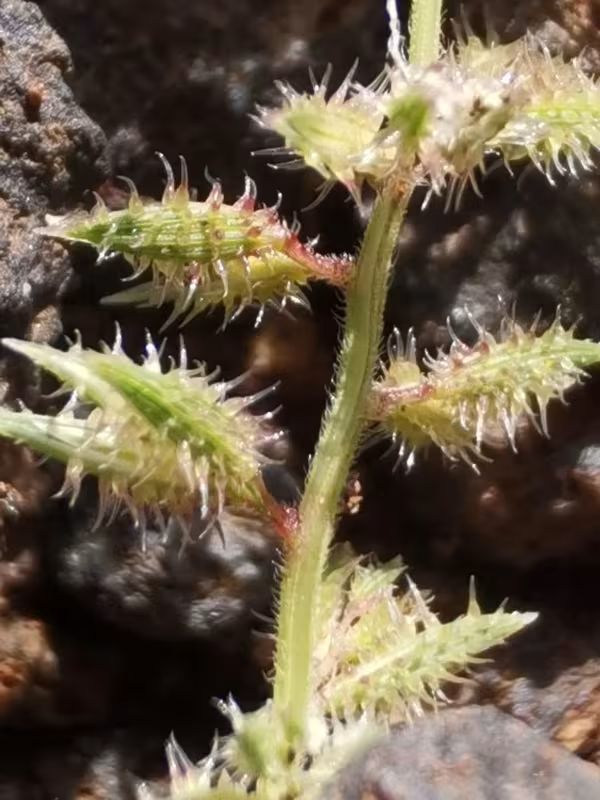
Description
Sowing dates
Tragus racemosus is a warm-season annual grass that requires significant soil warmth to germinate effectively after the winter season.
The ideal sowing window begins in late spring, once the risk of frost has completely passed and the soil has reached consistent thermal levels for rapid emergence.
Direct surface seeding or very shallow incorporation is recommended to ensure that the light-sensitive seeds are not buried too deeply within the substrate.
Moisture availability during the initial phase of germination is crucial for the establishment of a healthy root system, which determines the plant's future vigor.
Given its fast growth rate, the plant is well-suited for rapid field colonization, allowing it to compete effectively against other opportunistic species.
Growing requirements
This grass thrives in well-drained, sandy, or light-textured soils where sunlight exposure is maximized throughout the day, preventing moisture stagnation.
It exhibits remarkable tolerance to heat and drought, making it an excellent candidate for regions prone to desertification or lacking regular rainfall.
The species is highly sensitive to shading and performs best in open, sunny areas where it is not overshadowed by taller bushes or trees.
It adapts well to soils with low fertility and high salinity levels, which are conditions that typically inhibit the growth of conventional cereal crops.
Maintaining a balanced temperature between 20 and 30 degrees Celsius during the growing season allows for optimal biomass production and seed maturation.
Yield
While not a primary high-yield forage crop, Tragus racemosus provides significant ecological value through soil stabilization and erosion mitigation on loose terrain.
In grazing scenarios, it should be utilized during its early vegetative stages, as the plant becomes coarse and less palatable once it reaches maturity.
Seed production is prolific, contributing to the plant's ability to propagate itself naturally and persist in the same location across multiple seasons.
Biomass output is directly influenced by nitrogen levels in the soil, even though the species is generally adapted to nutrient-poor environments.
Integrated management with other drought-resistant grasses can enhance the overall productivity and nutritional quality of pastures located in arid climate zones.
Main diseases and pests
Tragus racemosus possesses a natural resistance to many common fungal diseases, largely due to its sclerified leaf tissues and specialized epidermis.
The most significant threat to its health is prolonged waterlogging, which can compromise its root system and create an environment suitable for anaerobic bacteria.
Insects generally have a low impact on established populations because the plant's physical structure acts as a deterrent for many herbivores and pests.
Competition from aggressive fast-growing weed species during the establishment phase requires careful monitoring to ensure that the seedlings are not crowded out.
Monitoring for soil-borne pests like wireworms is advisable in intensive agriculture settings, as they can cause damage to the developing roots of young plants.