
Tragus australianus
Tragus australianus
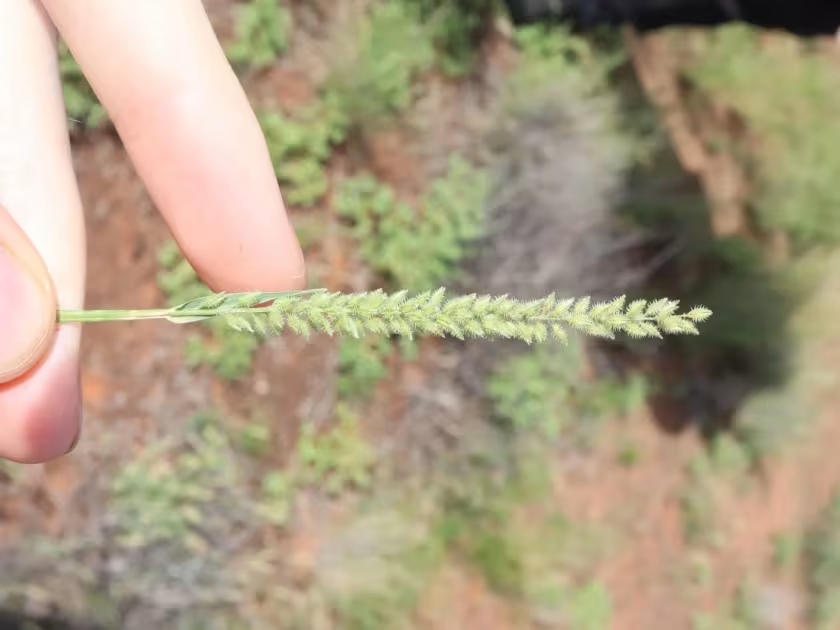
Description
Growing requirements
Tragus australianus is an annual grass species belonging to the Poaceae family. It is distinct for its burr-like inflorescences which feature hooked spines, an evolutionary adaptation that facilitates seed dispersal by adhering to the fur of animals or clothing.
Native to arid regions of Australia, this species is highly adapted to extreme environmental stress. It thrives in hot, semi-desert conditions where water availability is extremely low and temperature fluctuations are severe throughout the day.
Regarding soil requirements, this plant prefers light, sandy substrates with excellent permeability. It possesses a high tolerance for alkaline and saline soils, making it a viable candidate for land reclamation in degraded areas where common crops fail to establish.
The agronomy of Tragus australianus focuses on its low-input requirements. It does not demand regular irrigation or synthetic fertilization, relying instead on its efficient root system to extract nutrients from deep within the soil profile.
Economically, the species serves as a soil stabilizer rather than a primary fodder crop. Its potential for erosion control is high, as it anchors loose sand and topsoil, preventing desertification in sensitive ecological zones prone to wind degradation.
Main diseases and pests
The primary threat to the stability of Tragus australianus populations is waterlogging. Excessive moisture in the rhizosphere quickly leads to root rot and systemic failure of the plant, especially in clay-heavy or poorly drained soils.
While the plant is generally hardy, it can occasionally be affected by fungal pathogens such as smuts or rusts if exposed to high humidity for extended periods. However, due to the high silica content in its leaves, it remains relatively resistant to many common herbivorous insects.