
Tragus berteronianus
Tragus berteronianus
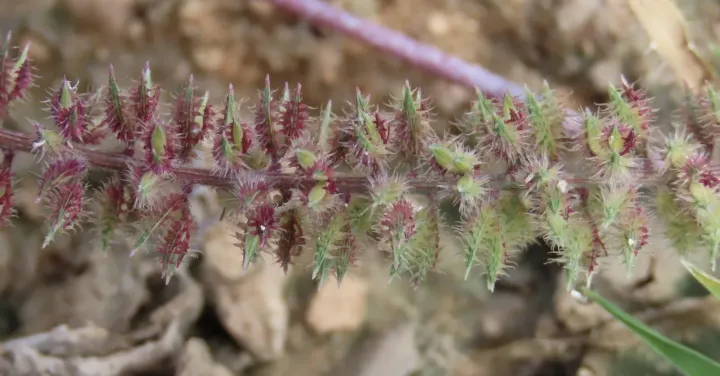
Description
Growing requirements
Tragus berteronianus is an annual grass species belonging to the Poaceae family, widely recognized for its adaptability to arid and semi-arid environments. It serves as a resilient crop option for marginal lands where agricultural productivity is limited by low moisture.
Native to parts of Africa and the Americas, this plant thrives in sandy or rocky soils with low fertility levels. Its evolutionary development allows it to persist in habitats characterized by extreme heat and erratic rainfall patterns.
The crop requires full sun exposure and well-drained soil conditions to reach its peak growth potential. It exhibits significant tolerance to alkaline soil conditions, which are often unfavorable for most traditional grain or forage crops.
Botanically, the plant features distinctive hooked spikelets that assist in seed dispersal via livestock and wild animals. The growth habit is typically spreading or prostrate, which provides essential ground cover and helps in soil stabilization in fragile landscapes.
Agronomic management focuses on maintaining moderate density to ensure sufficient forage yield. Due to its hardiness, it requires very little intervention, such as irrigation or fertilization, making it a low-input choice for extensive pasture systems in arid zones.
Main diseases and pests
Disease pressures for this species primarily include leaf rusts that can emerge during periods of stagnant humidity or localized rainfall. Insect pests, particularly locusts and other foliage-consuming insects, remain the main biotic threats during the vegetative growth phase.