
Siebold's crabapple
Malus toringo (Siebold) Siebold ex de Vriese
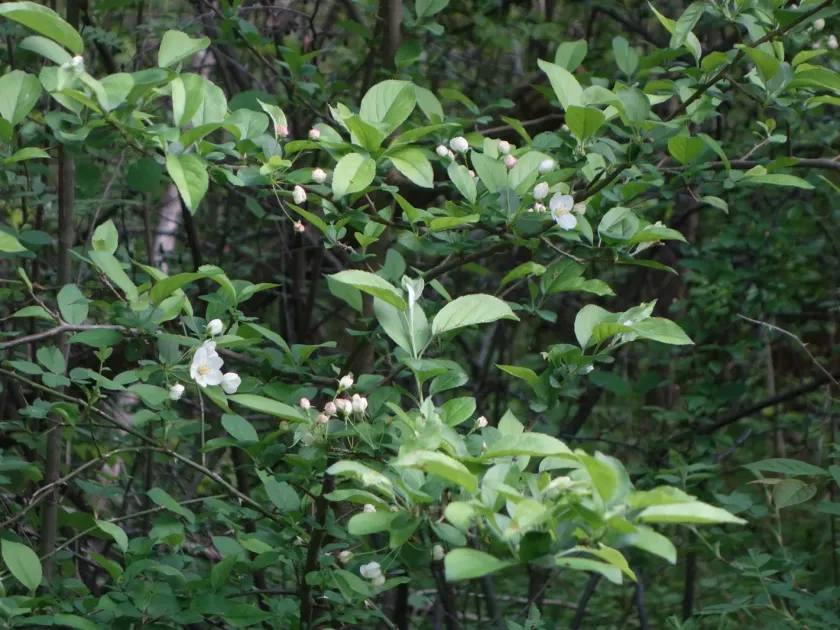
Description
Growing requirements
Siebold's crabapple (Malus toringo) belongs to the Rosaceae family. This ornamental species is recognized for its dense, spreading habit, beautiful spring blossoms, and small, colorful fruit that provides interest throughout the autumn and winter months.
Originating from East Asia, this tree is highly valued for its adaptability. It thrives in well-drained, fertile soil and requires a location with full sun to partial shade to reach its full aesthetic potential and produce abundant flowers.
Climate adaptability is one of its key strengths, as it demonstrates significant cold tolerance. It performs best in temperate climates where it can experience distinct seasonal changes, which are essential for its natural growth cycle and dormancy.
Regarding soil, it prefers slightly acidic to neutral pH levels. Ensuring good drainage is critical, as the roots are sensitive to waterlogging. Incorporation of organic matter during planting helps establish a strong root system in the initial years.
Maintenance includes routine watering during dry spells and light pruning. Pruning should be performed during the dormant season to manage the shape and size of the tree, ensuring that it complements the landscape without becoming overcrowded.
Main diseases and pests
The tree can be susceptible to common apple diseases, most notably apple scab and powdery mildew. These are particularly prevalent in regions with high humidity or poor air circulation within the tree's canopy.
Pests such as aphids, spider mites, and various lepidopteran larvae may feed on the foliage. While usually not fatal, severe infestations can detract from the tree's ornamental appearance and overall vigor if left unmanaged.
Integrated Pest Management (IPM) is recommended for this species. This includes selecting resistant cultivars where possible, maintaining tree health through proper fertilization, and monitoring for early signs of pest activity.
Good cultural practices, such as clearing leaf litter from beneath the tree in autumn, significantly reduce the risk of overwintering pathogens. Keeping the area free of debris helps prevent fungal spores from reinfecting the tree in spring.
In cases of severe disease, targeted fungicide applications may be necessary. However, focusing on preventive care, such as thinning the canopy to promote airflow, remains the most effective strategy for long-term tree health.