
Tofieldia calyculata
Tofieldia calyculata
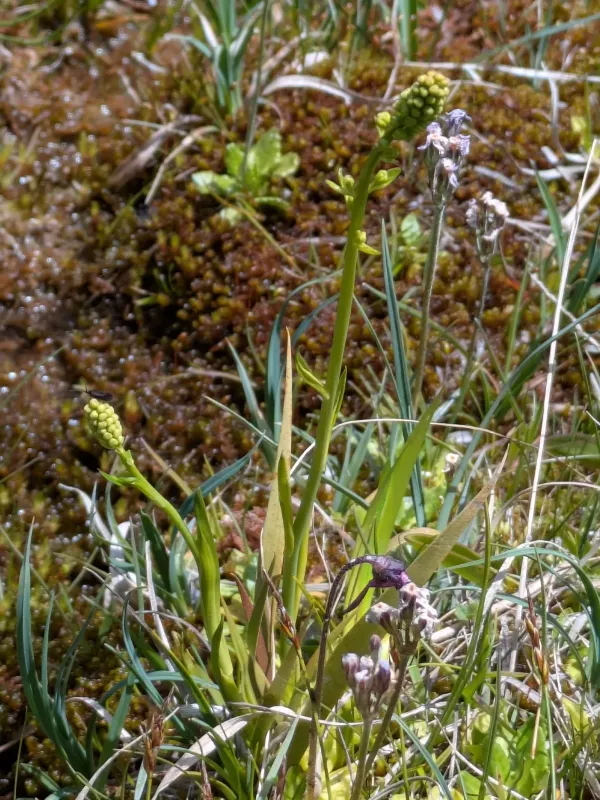
Description
Growing requirements
Tofieldia calyculata, commonly known as Tofield's asphodel, is a perennial herbaceous plant belonging to the Tofieldiaceae family. It is characterized by its basal rosettes of sword-shaped leaves and erect racemes of small, yellowish-white flowers.
The plant is native to the mountainous regions of Central and Southern Europe. Its natural habitat is typically found in alpine meadows, rocky slopes, and calcareous wetlands, where it thrives in mineral-rich, alkaline soils.
Agricultural success with this species depends on maintaining constant soil moisture. It requires a well-drained but permanently damp substrate, rich in lime, which mimics its native limestone-dominated ecological niche.
Climate-wise, the plant prefers cool temperatures and high humidity. It is fully hardy and capable of surviving extreme alpine winters, provided it is covered by snow, which serves as a natural insulator for the root system.
In a controlled growing environment, partial shade is ideal. Avoiding direct exposure to high-intensity midday sun is crucial to prevent dehydration and ensure the longevity of the plant's delicate root structure.
Main diseases and pests
The primary threats to the cultivation of Tofieldia calyculata are fungal infections, particularly those triggered by poor ventilation and soil saturation, such as root rot or damping-off.
Mildew and other foliar diseases can emerge if the plant is grown in stagnant air conditions, which are contrary to its natural high-altitude environment where breeze is constant.
Gastropod pests, including slugs and snails, are frequent visitors that feed on the soft, succulent leaves, potentially causing significant damage to the plant's overall health.
Integrated pest management should focus on creating a hostile environment for slugs through physical barriers and maintaining optimal humidity levels to prevent fungal growth.
Regular inspection of the plant base is necessary, as any sign of yellowing or decay can indicate a pathogen attack that requires immediate removal of the affected material to protect the rest of the crop.