
Woolly tidestromia
Tidestromia lanuginosa
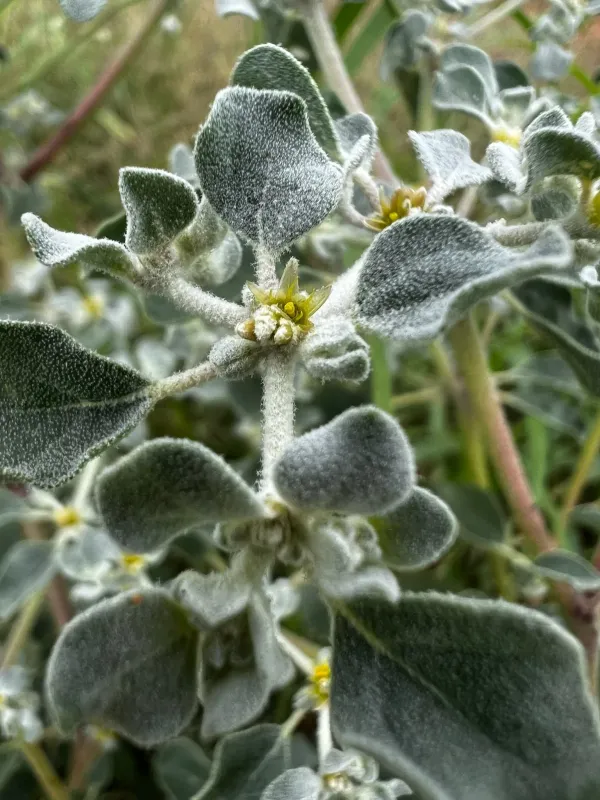
Description
Growing requirements
Woolly tidestromia (Tidestromia lanuginosa) is an annual herbaceous plant belonging to the Amaranthaceae family. It is recognized for its adaptation to arid climates, typical of the southwestern United States and northern Mexico.
The plant thrives in sandy or gravelly soils where drainage is excellent. It is commonly found in disturbed sites, roadsides, and open pastures where competition from denser vegetation is minimized by environmental stress.
Morphologically, the plant is characterized by its dense, woolly hairs covering the stems and foliage. This pubescence provides a significant advantage by reflecting intense solar radiation and reducing transpiration rates under high heat.
Climate requirements include high temperatures and a prolonged growing season. Woolly tidestromia does not tolerate poorly drained, waterlogged soils, as its root system is prone to fungal decay in such conditions.
The growth strategy of this species involves rapid development during the short periods of moisture availability, allowing it to complete its reproductive cycle efficiently in desert ecosystems.
Main diseases and pests
As a desert-adapted species, Woolly tidestromia faces few natural threats from common agricultural pests compared to standard food crops.
The most significant threat to its survival is soil moisture excess, which leads to root rot and eventual plant death. This is why it rarely invades irrigated fields where soil moisture levels are maintained at high, constant levels.
Insect herbivory is generally low because the dense hairs on the leaves and stems act as a physical barrier, deterring most common foliar pests found in surrounding areas.
In agricultural settings, the main threat is competition for nutrients and sunlight with stronger, more aggressive species that may eventually displace the tidestromia.
Chemical control measures, specifically broad-spectrum herbicides, are the most effective method for managing the plant when it appears in cultivated fields or managed grazing areas.