
Tidestromia carnosa
Tidestromia carnosa
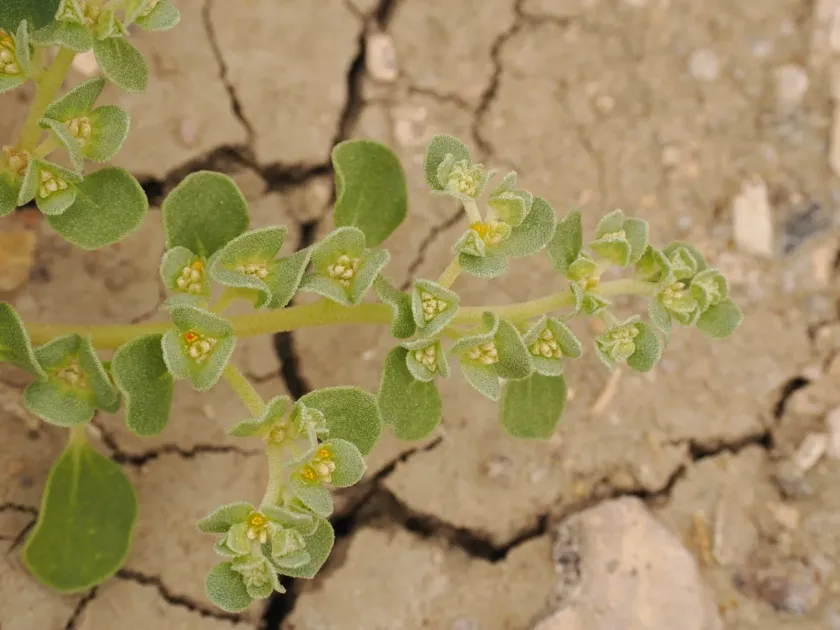
Description
Growing requirements
Tidestromia carnosa belongs to the Amaranthaceae family and is recognized for its adaptation to desert and saline habitats. Native to North America, it exhibits specific physiological traits that allow it to thrive in nutrient-poor and high-salt environments.
The botanical structure of the plant features succulent foliage, which serves as a vital storage organ for water. This morphological adaptation is essential for maintaining cellular turgor under the intense heat and evaporation rates typical of its natural range.
For successful growth, this plant requires high solar radiation and thrives in environments where other crops typically fail. Its ability to tolerate soil salinity makes it a subject of interest for research into saline agriculture and arid land reclamation strategies.
Soil requirements prioritize excellent drainage to ensure that the root zone remains oxygenated. While the plant can withstand low-nutrient substrates, it requires a neutral to alkaline pH to maintain optimal nutrient uptake efficiency.
Agricultural management should focus on maintaining a consistent thermal regime during the growing season. Frost sensitivity is high; therefore, environmental stability during the early stages of establishment is critical for ensuring full development of the plant canopy.