
Thrixanthocereus blossfeldiorum
Thrixanthocereus blossfeldiorum
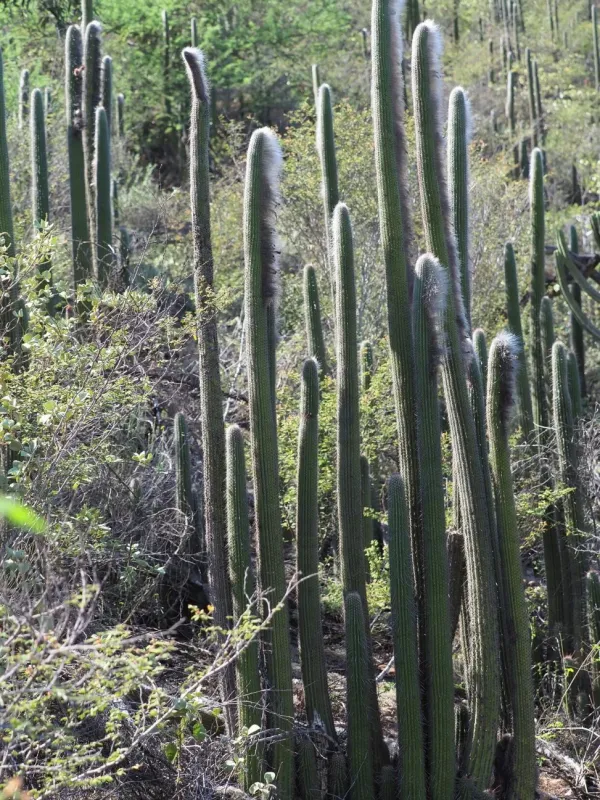
Description
Growing requirements
Thrixanthocereus blossfeldiorum is a striking columnar cactus belonging to the Cactaceae family. Native to the arid, high-altitude slopes of Peru, this species is well-adapted to extreme environmental fluctuations and rocky terrains.
Cultivation requires very high light levels to preserve the density of the white hairs that cover the stems. In indoor environments, placing the cactus in the brightest available location is mandatory to prevent etiolation and structural weakness.
The growing medium must be highly porous and inorganic. A mixture of gravel, perlite, and coarse sand with a very small percentage of organic loam is recommended. Good drainage is essential to ensure that water does not remain stagnant near the base of the plant.
Temperature management is vital throughout the year. During the growing season, a range of 20–30°C is preferred, while a cool rest period during the winter, between 8–12°C, is necessary to mimic the natural climate of the Andes and promote long-term vitality.
Watering practices should be conservative. During the summer, water only after the substrate has completely dried out. In the winter months, the plant should remain almost completely dry to prevent physiological stress and fungal infections.
Main diseases and pests
Fungal pathogens, particularly those causing root rot, represent the most significant threat to this species. Preventive measures include ensuring perfect airflow around the plant and strictly regulating irrigation cycles in low-light conditions.
Mealybugs are the most common pests found on this cactus, often lodging deep within the dense woolly covering. Regular manual inspection and the use of appropriate systemic insecticides are required to manage potential infestations effectively.