
Cut-leaved germander
Teucrium botrys L.
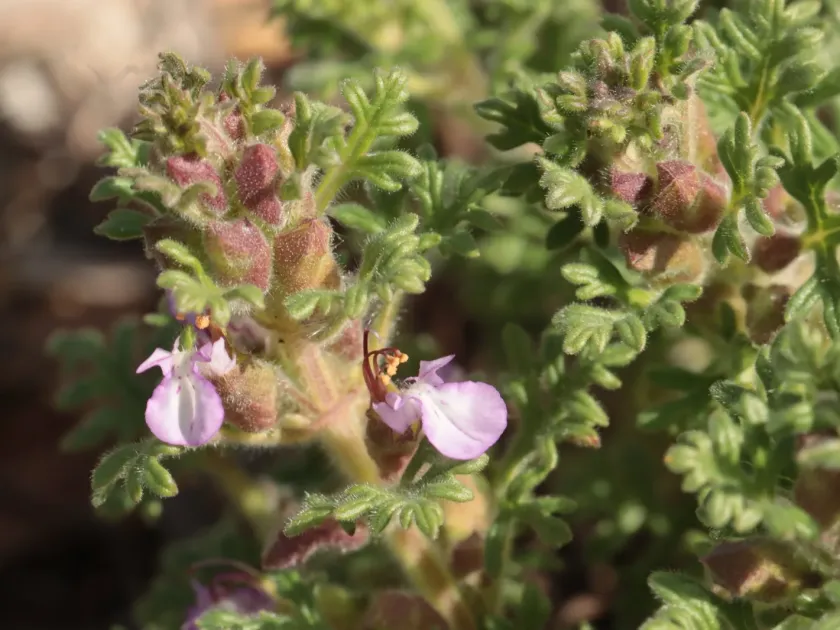
Description
Sowing dates
Cut-leaved germander is an annual herbaceous plant that is propagated by seeds. Sowing is typically carried out in mid-spring, once soil temperatures consistently reach 10-12 degrees Celsius to ensure steady germination.
The seeds are relatively small and require a well-prepared, fine-textured seedbed. Sowing should be done in rows spaced 30 to 40 centimeters apart to provide enough room for the plants to mature and allow for easy weed management.
Seed depth is critical; they should be covered with no more than 0.5 to 1 centimeter of soil. Following the sowing process, a light rolling of the soil surface ensures optimal contact between the seeds and the soil moisture.
The germination period usually lasts 2 to 3 weeks depending on soil moisture levels. During the seedling stage, the crop is quite delicate, so manual weeding is often required to prevent competition from faster-growing weeds.
In regions with longer growing seasons, some growers experiment with successive planting to extend the harvesting window, though the plant is naturally adapted to a single-cycle growth pattern.
Growing requirements
Belonging to the Lamiaceae family, this plant prefers well-drained, calcareous, or rocky soils. It is particularly sensitive to waterlogging, so heavy clay soils must be amended with organic matter or sand to improve drainage.
Full sun exposure is essential for the healthy development of this species. Shaded locations will result in leggy plants with reduced concentration of volatile oils and decreased medicinal efficacy.
The plant is known for its moderate drought tolerance once established. It thrives in temperate climates but requires adequate moisture during the initial stages of its vegetative growth period.
Optimal growth occurs at temperatures between 20 and 25 degrees Celsius. The crop is sensitive to extreme heat, which can accelerate flowering and reduce the overall biomass yield if not managed properly.
Soil fertility management should focus on balanced nutrient levels. Excessive nitrogen fertilizer should be avoided, as it encourages excessive vegetative growth at the expense of secondary metabolites and chemical quality.
Yield
The commercial yield of cut-leaved germander depends heavily on plant density and the quality of field maintenance. Under optimal conditions, producers can expect a dry matter yield ranging from 1 to 2 metric tons per hectare.
The highest concentration of active pharmaceutical compounds is observed during the full-flowering stage. Consequently, timing the harvest correctly is the most important factor for achieving high-quality production.
Yield components are influenced by the number of side branches per plant. Proper spacing and adequate sunlight help maximize these structural characteristics throughout the vegetative development phase.
Post-harvest processing, including careful drying and cleaning, is vital. Improper handling during these steps can reduce the final sellable yield by causing significant weight loss or degradation of plant quality.
Sustainable agronomic practices, including crop rotation and integrated fertility management, are key to maintaining long-term yield stability in commercial cultivation sites.
Main diseases and pests
Root rot is the primary threat to this crop, especially in poorly drained soils or during periods of excessive rainfall. This fungal condition can quickly spread and lead to significant crop failure if not addressed.
Insects, particularly aphids and certain species of leaf-eating beetles, can cause localized damage. Regular field scouting is necessary to identify infestations before they reach economic damage thresholds.
Powdery mildew can occur during periods of high humidity and poor air circulation. This fungal disease creates a visible white coating on the leaves and weakens the plant's overall vigor.
Weed pressure remains the most significant biotic challenge in the early weeks after sowing. Effective weed control is essential to prevent resource competition and ensure the crop reaches its full potential.
Preventative measures include clean field preparation, balanced irrigation to avoid water stagnation, and the use of targeted biological control agents when pest populations start to rise.
Harvesting
The harvest should take place at the peak of the flowering phase. This is the moment when the concentration of essential oils and other active compounds is at its maximum, ensuring the highest product value.
Mechanical harvesting is generally performed by mowing the plants 5 to 10 centimeters above the ground. It is critical to ensure that no soil or debris is collected during the process to maintain the purity of the product.
Immediate transportation to the drying facility is necessary to prevent spoilage. Drying should be conducted at temperatures not exceeding 40 degrees Celsius to preserve the delicate chemical composition of the plant.
After drying, the material should be sorted and cleaned to remove any coarse stems or incidental organic impurities. Quality control checks at this stage are crucial for meeting industrial standards.
Final storage should take place in a dry, cool, and well-ventilated area using appropriate packaging to prevent moisture uptake and ensure the product remains stable until it reaches the end user.