
Terminalia stenostachya
Terminalia stenostachya
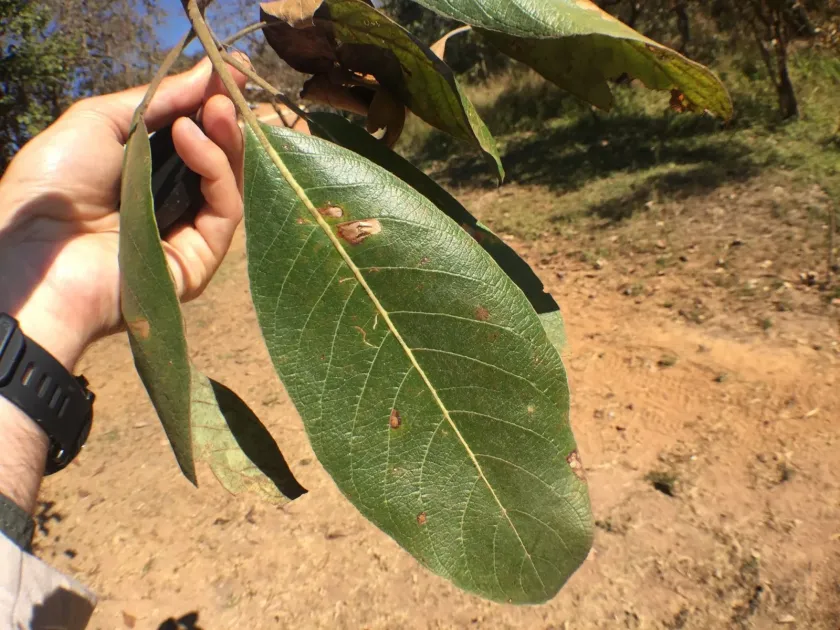
Description
Growing requirements
Terminalia stenostachya is a woody plant species belonging to the Combretaceae family. It is native to the South American continent, specifically thriving in the Brazilian Cerrado, where it acts as a significant component of the local savannah vegetation.
This species is highly adapted to acidic, nutrient-poor, and well-drained soils. Its agronomic value lies in its ability to persist in environments that are typically challenging for conventional agriculture, making it a sustainable choice for land restoration and marginal soil utilization.
The climate requirements for Terminalia stenostachya involve a tropical regime characterized by distinct wet and dry seasons. The plant exhibits xeromorphic traits that allow it to maintain physiological activity during prolonged periods of water scarcity.
Agronomic management focuses on initial establishment, ensuring the young trees receive adequate sunlight and are protected from excessive competition by herbaceous cover. Once established, the species is relatively low-maintenance, requiring minimal chemical inputs.
Its primary economic utility is linked to its timber, which is durable and suitable for structural use and carpentry. Furthermore, it plays a vital role in agroforestry, providing shade for livestock and contributing to carbon sequestration in degraded tropical landscapes.