
Terminalia bellirica
Terminalia bellirica
Description
Sowing dates
Propagation of Terminalia bellirica is primarily achieved through seeds. To improve germination rates, it is recommended to soak the seeds in warm water for 24 hours prior to sowing, as this helps soften the hard woody endocarp that protects the embryo.
The optimal time for sowing is at the beginning of the monsoon season. Nurseries should use well-draining soil mixtures to prevent damping-off diseases, which are common in young seedlings under high humidity conditions.
In large-scale operations, seedlings are raised in containers for the first year to ensure a strong root system before outplanting. Proper space management in the nursery allows for the selection of the most vigorous plants for field establishment.
When transplanting to the field, digging pits of at least 60x60x60 cm is advised. Incorporating organic matter, such as compost or well-rotted manure, into the soil during planting significantly boosts the survival and early growth rate of the young trees.
Spacing is a crucial factor for this species. To ensure healthy crown development and access to sunlight, trees should be planted at least 8 to 10 meters apart, allowing each individual to reach its full physiological potential.
Growing requirements
Terminalia bellirica is a large deciduous tree belonging to the Combretaceae family. It is native to the tropical regions of Southeast Asia and India, where it thrives in diverse habitats, ranging from tropical evergreen forests to deciduous woodlands.
The species is remarkably adaptable regarding soil types, performing well in sandy loams, red lateritic soils, and even slightly rocky terrain. However, it exhibits superior growth on deep, fertile, and well-drained soil profiles.
Climatic requirements are strictly tropical. The tree thrives in temperature ranges between 20°C and 35°C. It is highly sensitive to frost, which limits its commercial cultivation to frost-free tropical or subtropical zones.
While the tree is drought-tolerant once established, supplemental irrigation is beneficial during the first two to three years. This practice ensures faster establishment and better resilience against seasonal dry spells that characterize its natural habitat.
Full sun exposure is essential for the tree's health. Terminalia bellirica does not tolerate heavy shading, as light deprivation leads to weak, spindly stems and drastically reduces fruit production, which is the primary economic target of the crop.
Yield
The economic value of Terminalia bellirica is mainly derived from its fruits, commonly known as 'Bibhitaki' in Ayurvedic medicine. These fruits are valued for their high tannin content and medicinal properties, which are utilized in various pharmaceutical preparations.
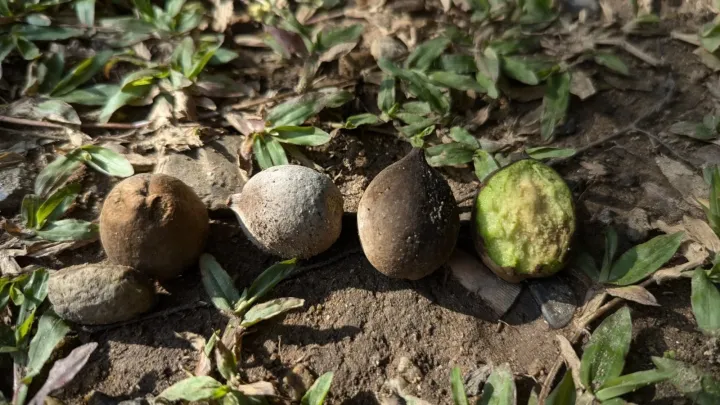
Harvesting typically commences once the trees reach 8 to 10 years of age. The fruits are collected after they naturally transition to a dark brown or grey color, indicating maturity. Manual collection from the ground or by climbing is the standard method.
Post-harvest management involves drying the fruits in a shaded, well-ventilated area to prevent fungal contamination. Proper drying is crucial for preserving the chemical compounds, such as tannins and gallic acid, which are essential for commercial quality standards.
The timber of Terminalia bellirica is also commercially significant. It is widely used in construction, flooring, and the manufacturing of furniture due to its density and durability. It serves as an important secondary income stream for farmers.
The global demand for natural, plant-based products in the cosmetic and health food industries keeps the market for this crop stable. Sustainable harvesting practices ensure the long-term viability of the plantations.
Main diseases and pests
Fungal leaf spot diseases can affect Terminalia bellirica, especially in regions with high humidity and poor air circulation. Regular pruning to thin the canopy is a standard preventive measure to ensure better airflow and reduced humidity around the foliage.
Several insect species, including defoliators and borers, can pose risks. Monitoring for signs of insect activity is vital. Integrated pest management, focusing on biological controls, is preferred to maintain the ecological balance of the plantation.
Root rot, often caused by stagnant water, is a significant threat in poorly drained areas. Proper site selection and land preparation are the most effective ways to mitigate this risk and ensure the longevity of the trees.
Young seedlings are particularly vulnerable to browsing by wild animals and rodents. Protecting the base of the saplings with wire mesh or trunk guards is recommended during the first few years of establishment in open areas.
Nutrient deficiencies may occur in depleted soils, leading to chlorosis and stunted growth. Annual applications of balanced organic fertilizers, applied around the drip line, help maintain tree vigor and resistance to biotic and abiotic stresses.