
Teramnus mollis
Teramnus mollis
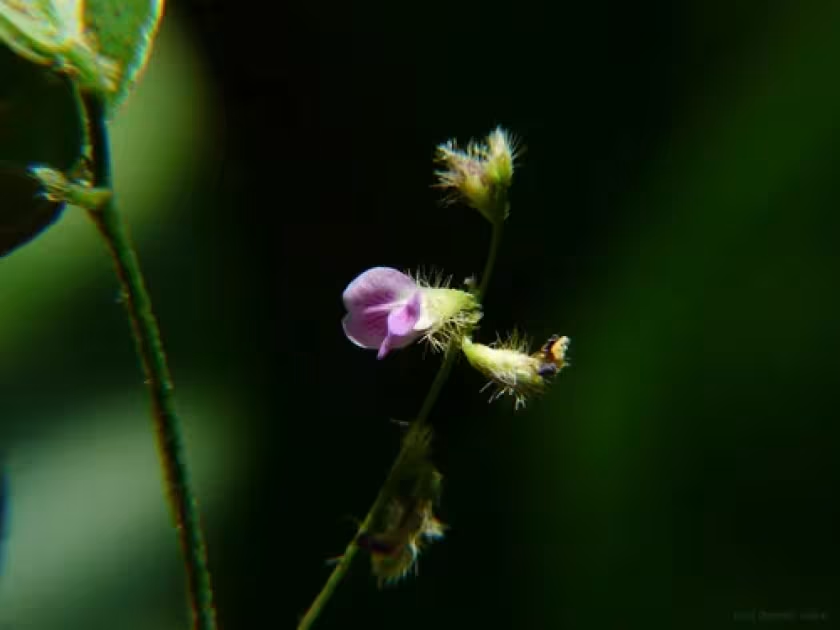
Description
Sowing dates
Teramnus mollis is a thermophilic perennial legume, meaning its sowing dates must align with the onset of the stable rainy season or when temperatures reliably exceed 20-22 degrees Celsius.
The optimal planting time in tropical regions occurs shortly after the arrival of seasonal rains, which ensures enough moisture for seed germination and vigorous initial establishment.
Seed preparation often involves scarification, as the seed coat can be quite hard and may delay uniform germination under natural conditions.
Seeds are sown in rows at a depth of 1-2 centimeters, ensuring firm contact with the soil to promote rapid and uniform emergence.
For pasture or hay production, seeding rates are determined based on seed quality and the desired density of the sward during the plant's first year of growth.
Growing requirements
This crop belongs to the Fabaceae family and is highly valued for its adaptability to various soil and climatic conditions throughout the tropical belt.
The plant prefers well-drained soils but shows tolerance to temporary waterlogging and exhibits resilience to dry spells once the root system is well-established.
Teramnus mollis thrives in temperature ranges between 20 and 30 degrees Celsius and requires sufficient solar exposure for optimal vegetative biomass accumulation.
While often found in understory habitats in the wild, suggesting a level of shade tolerance, the highest yields are achieved in full-sun conditions.
Soil fertility remains critical for this crop, particularly regarding phosphorus and potassium levels, which stimulate root development and effective nitrogen-fixing nodulation.
Yield
The productivity of Teramnus mollis depends on stand density, management intensity, and the availability of precipitation throughout the active growing season.
The crop produces significant green biomass, which is notable for its high crude protein content, making it an excellent fodder component for ruminants.
Agricultural uses primarily involve grazing, hay production, or silage, as the plant demonstrates good regrowth potential following controlled grazing intervals.
With systematic harvesting, the crop can provide multiple cuts per season, provided that soil moisture and nutrient availability are maintained.
Total biomass yields increase substantially with the application of minimal mineral fertilizers, although the plant's natural nitrogen-fixing ability also contributes to its overall output.
Main diseases and pests
Primary threats to the crop include various fungal diseases that thrive in high-humidity environments where air circulation within the canopy is poor.
Insect pests that attack leaves and young shoots represent the most significant threat, potentially slowing growth rates and reducing the total harvestable biomass.
Root damage caused by nematodes or soil-borne pathogens is more frequent in areas with poor crop rotation practices or poor field drainage.
Effective management strategies include maintaining appropriate grazing cycles, preventing soil compaction, and utilizing locally adapted disease-resistant populations.
Early identification of pest or disease outbreaks and the removal of affected sections help minimize losses and ensure long-term pasture productivity.