
Teramnus labialis
Teramnus labialis
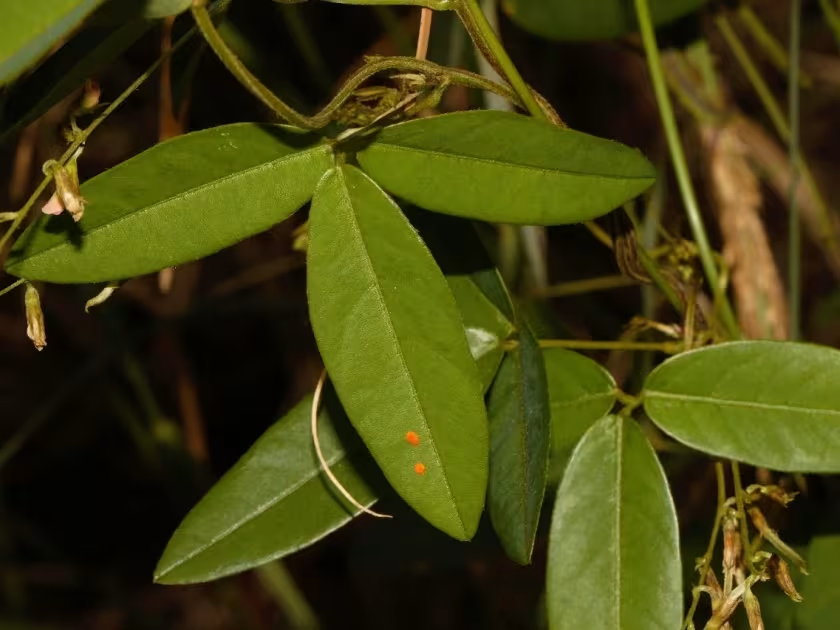
Description
Sowing dates
Teramnus labialis, being a tropical species, thrives best when sown at the onset of the rainy season to ensure sufficient moisture for seed germination.
Seeds have a hard coat, so scarification is strongly recommended before planting to break dormancy and significantly increase the percentage of successful sprouts.
The sowing rate is typically between 10 to 15 kg per hectare, depending on whether it is grown as a sole crop or intercropped with other forage grasses.
Seeds should be placed at a shallow depth of 1–2 cm, as deeper sowing can hinder the emergence of the seedlings and lead to lower stand density.
The soil temperature should ideally be consistently warm, ranging between 25 and 30 degrees Celsius, which encourages rapid early development of the root system.
Growing requirements
As a member of the Fabaceae family, this legume is a perennial herb characterized by its climbing or trailing habit, making it an excellent ground cover.
It is remarkably adaptable to various soil types, ranging from sandy soils to heavier loams, provided that the drainage remains adequate.
The plant demonstrates high tolerance for lower soil fertility levels because it is capable of fixing atmospheric nitrogen in association with soil bacteria.
While it prefers full sun for optimal growth, Teramnus labialis exhibits a degree of shade tolerance, allowing it to grow in diverse tropical environments.
Moderate rainfall is preferred; however, the plant is known to survive short periods of drought, which makes it a resilient choice for regions with erratic weather.
Yield
Teramnus labialis is highly valued for its high protein content in the foliage, making it an excellent dietary supplement for various types of livestock.
When managed properly, the biomass yield can reach up to 15–20 tons per hectare, especially under favorable conditions during the growing season.
The crop responds well to repeated cutting, showing a strong ability to regenerate quickly, which is a vital characteristic for sustainable forage production.
In addition to livestock fodder, the plant is often utilized as a green manure to enrich the soil with nitrogen and improve overall physical properties.
The quality of the forage remains relatively high throughout the vegetative phase, provided it is harvested before the stems become too woody and fibrous.
Main diseases and pests
The primary threats include various fungal pathogens that can develop during high humidity, potentially causing leaf spot or root rot in dense stands.
Nematode infestations in the soil can pose a significant challenge, weakening the root system and reducing the overall vigor and yield of the crop.
Insect pests, such as various weevil species and lepidopteran larvae, frequently target the leaves and reproductive parts, causing economic damage.
Good agricultural practices, such as maintaining proper plant spacing and crop rotation, are essential to minimize the risk of disease outbreaks.
Since the crop is mainly intended for animal consumption, the use of chemical pesticides should be strictly monitored and kept to a necessary minimum.
Harvesting
The optimal harvest timing for forage is at the beginning of the flowering stage, which ensures a good balance between biomass quantity and protein quality.
When utilized for grazing, a rotational grazing system is highly recommended to allow the plants sufficient recovery time between grazing cycles.
For seed production, the harvest should occur once the pods turn brown but before they undergo natural dehiscence, which would lead to significant seed loss.
Post-harvest management involves careful drying of seeds to a low moisture content, ensuring longevity and maintaining high viability for subsequent seasons.
Effective management of harvest schedules ensures the longevity of the stand, allowing the crop to remain productive for several years without replanting.