
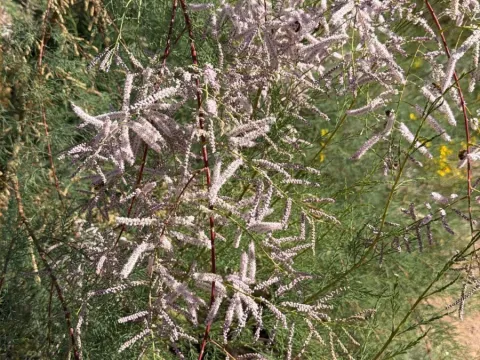
Tamarisk
Tamarix L.
Tamarisk (Tamarix L.) is a genus of shrubs and small trees belonging to the Tamaricaceae family. Renowned for its resilience, this plant thrives in environments that are typically hostile to most agricultural crops, including saline and sandy soils.
What the section contains


Tamarisk
The genus originates from arid and semi-arid regions spanning from the Mediterranean to Central Asia. Its natural habitat is characterized by low precipitation and high heat, where the species has developed efficient physiological mechanisms for water conservation.
Botanically, the plant is distinguished by its scale-like leaves and high adaptability to extreme sun exposure. It possesses an extensive root system that enables it to stabilize unstable sandy soils and extract moisture from deep soil layers.
Regarding cultivation requirements, Tamarisk is highly heliophilous and requires full sun exposure to flourish. It is exceptionally tolerant of soil salinity, making it an essential tool for the biological reclamation of saline farmlands and coastal areas.
Its primary agricultural uses include windbreaks, erosion control, and soil stabilization. Furthermore, it serves as a valuable nectar source for bees during the peak of summer, contributing to regional biodiversity and honey production.
Tamarisk is naturally robust and faces few significant disease pressures. However, in poorly ventilated or excessively humid conditions, powdery mildew can occur, affecting the aesthetic and physiological performance of the shrub.
Insect pests such as leaf beetles and spider mites can occasionally cause damage. These infestations are more prevalent in stressed plants, making proper irrigation management during initial establishment crucial for overall plant health.
Waterlogging is a major threat to the plant's health. While it survives drought, the root system is susceptible to fungal rots if exposed to standing water, emphasizing the importance of well-drained planting sites.
Routine maintenance involves pruning dead or diseased wood. This practice improves air circulation within the canopy and effectively reduces the habitat for potential insect pests, ensuring long-term vitality.
Monitoring pest populations is recommended during the active growing season. If intervention is necessary, targeted biological controls are preferred to preserve the populations of beneficial insects that naturally inhabit these shrubs.