
Athel tamarisk
Tamarix aphylla (L.) H. Karst.
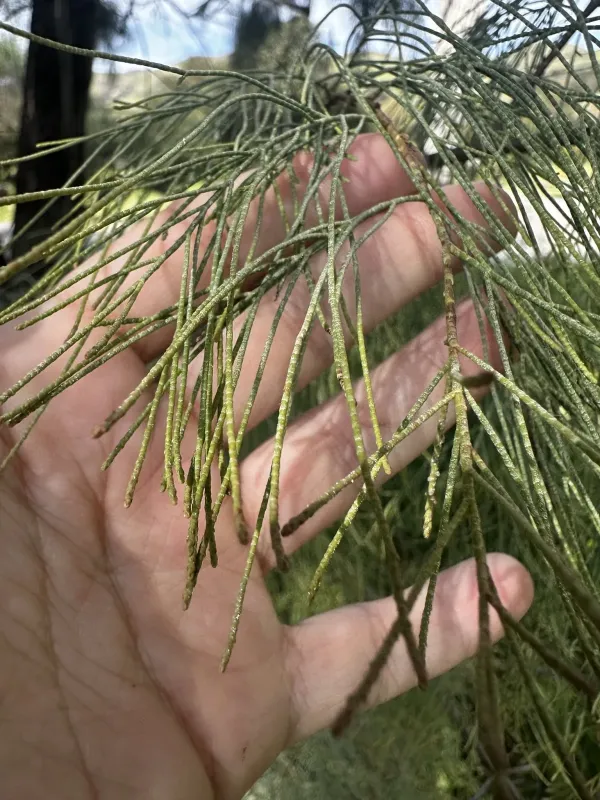
Description
Growing requirements
Athel tamarisk (Tamarix aphylla) is a significant tree species within the Tamaricaceae family, distinguished by its size and adaptability. Unlike many smaller shrubs in its genus, this plant grows into a substantial tree, frequently reaching 15 meters in height.
Native to arid regions across North Africa and the Middle East, the species has evolved to thrive in environments with minimal rainfall. It is widely considered one of the most resilient trees for extreme desert climates.
The plant requires full sun exposure to flourish. It has an extreme intolerance for shade, and its physiological efficiency drops significantly if it is overshadowed by other vegetation or infrastructure.
Athel tamarisk is a true halophyte, possessing unique adaptations that allow it to excrete excess salt through specialized glands on its branchlets. This allows the tree to colonize saline soils that would be toxic to most agricultural crops.
Soil requirements are relatively flexible, but the plant performs best in deep, well-drained soils. While it is incredibly drought-resistant, it relies on deep root systems that can access stable groundwater sources to sustain rapid growth rates.
Yield
The primary agricultural application for Tamarix aphylla is the establishment of windbreaks. Its dense, evergreen canopy provides a formidable barrier against high-velocity winds, reducing evaporation and protecting nearby crops.
The species is extensively used for soil stabilization and sand dune fixation. Its extensive root system anchors shifting soils, effectively mitigating wind erosion and desertification in fragile agricultural landscapes.
Athel tamarisk wood is highly valued for its density and durability. It is traditionally used for construction, crafting, and as an excellent fuel source with high calorific value, making it an economic asset in rural areas.
The tree serves as a valuable nectar source for pollinators, supporting biodiversity in regions where other flowering plants are scarce. This indirect benefit improves the overall health and yield of adjacent agricultural ecosystems.
As a low-maintenance agroforestry species, it assists in the long-term management of degraded lands. It enhances land productivity by creating a more stable microclimate and preventing the degradation of valuable topsoil.
Main diseases and pests
Leaf-feeding insects represent the most common biological threat. Periodic outbreaks of specific beetle populations can result in significant defoliation, though healthy trees usually recover once the infestation subsides.
Root rot and stem fungal infections are typically associated with poor drainage or excessive standing water. Providing adequate soil aeration is crucial to preventing these common plant health issues.
Parasitic plants such as dodder (Cuscuta species) can infest Athel tamarisk stands. Early identification and removal of infected branches are necessary to prevent the parasite from spreading throughout the planting.
While the tree is highly resistant to heat and dry winds, young saplings are vulnerable and require careful management during their establishment phase to avoid mechanical damage or resource competition.
Integrated pest management involves regular monitoring and sanitary pruning. By maintaining optimal soil drainage and avoiding over-irrigation, farmers can effectively reduce the risk of common diseases and maintain a healthy, productive grove.