
African tamarisk
Tamarix africana Poir.
Description
Growing requirements
African tamarisk (Tamarix africana) is a perennial shrub belonging to the Tamaricaceae family. Native to the Mediterranean region and North Africa, it is well-known for its ability to thrive in harsh, saline-heavy environments where many other plants fail to survive.
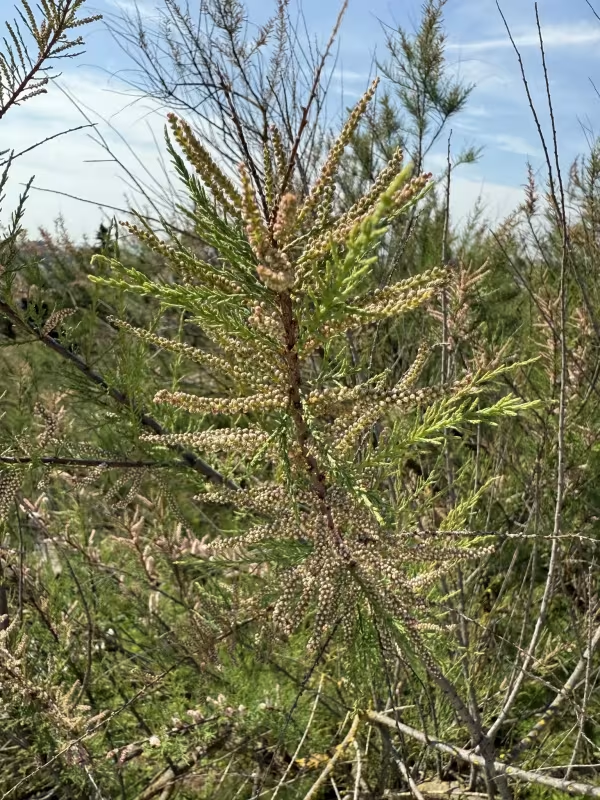
Botanically, this species is characterized by its feathery, scale-like leaves and attractive spikes of pinkish flowers. This structure is a primary adaptation to arid climates, allowing the plant to preserve water while maximizing its exposure to intense sunlight.
Successful cultivation requires a location with full sun exposure. It is highly intolerant of waterlogged soils, preferring sandy, rocky, or loose soils that allow for excellent drainage. Soil aeration is critical for its health and long-term development.
From an agronomic perspective, Tamarix africana is highly valued for its soil-binding properties. Its deep root system makes it an excellent choice for stabilizing dunes, sandy coastlines, and protecting agricultural lands from severe wind erosion.
Maintenance is relatively straightforward once the plant is established. It shows extreme drought tolerance, reducing the need for constant irrigation. However, strategic pruning is recommended to maintain shape and promote the blooming of healthy new terminal shoots.
Main diseases and pests
While the African tamarisk is generally hardy, it is susceptible to fungal infections of the stems and roots if grown in poor-draining soils with high humidity. Monitoring moisture levels is essential to prevent decay.
Common pests include aphids, scale insects, and spider mites, which can infest the succulent young tips of the branches. These pests can weaken the plant and hinder the vibrancy of its distinctive foliage.
Effective pest management involves early detection through regular inspection. If infestations become severe, targeted applications of horticultural soaps or systemic insecticides can be used to control populations without damaging the plant's sensitive structure.
Sanitation practices are vital. Pruning away dead or diseased wood during the dormant season helps maintain airflow and removes micro-habitats that support common garden pathogens, ensuring a healthier and more resilient plant.
To support the natural immunity of the shrub, it is recommended to keep the area around the base of the plant free of decaying organic matter, which can otherwise harbor dampness and encourage unwanted fungal activity near the root zone.