
Four-stamen tamarisk
Tamarix tetrandra Pall. ex M. Bieb.
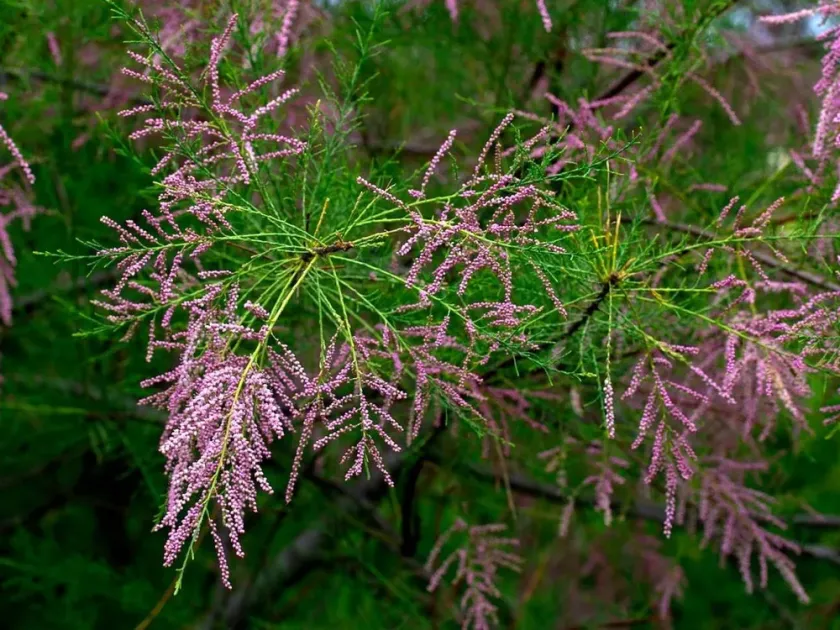
Description
Growing requirements
The four-stamen tamarisk (Tamarix tetrandra) belongs to the Tamaricaceae family and is a deciduous shrub native to Southeastern Europe and the Mediterranean. It is widely recognized for its high tolerance to harsh environmental conditions, particularly aridity and saline soils.
This species thrives in full sun exposure, which is an essential prerequisite for healthy development and profuse spring blooming. Choosing a site with well-draining soil is crucial, as the plant is highly susceptible to root rot if subjected to waterlogging or heavy, clay-rich substrates.
In terms of agricultural utility, it serves as an excellent stabilizer for loose, sandy soils and coastal areas prone to erosion. Its extensive root system provides structural integrity to the ground, making it a valuable plant for environmental reclamation projects and shelterbelts.
Agrotechnical management includes moderate pruning immediately after flowering, which encourages the growth of strong, new lateral shoots. Since the flowers appear on the previous year's wood, delaying pruning until late in the season would result in the loss of the following year's blossoms.
The plant is relatively low-maintenance once established, requiring deep but infrequent watering during prolonged droughts. It does not demand high levels of fertilization, as it is well-adapted to naturally nutrient-poor environments.
Main diseases and pests
While generally robust, the plant can be affected by various fungal pathogens when humidity levels are excessively high or when air circulation is impeded by poor planting density.
Insects such as aphids, scale insects, and tamarisk beetles can sometimes cause significant damage to the foliage, especially in climates where the species is not native.
Management of these threats involves monitoring foliage for signs of chlorosis or leaf drop, which often indicate early-stage pest infestation or root health issues.
Applying horticultural oils or systemic insecticides can be effective during the early stages of pest detection to ensure the plant maintains its ornamental and functional value.
Cultural control measures, such as providing adequate spacing between individual plants, are fundamental to reducing the microclimatic humidity that favors fungal growth.