
Swertia chirayita
Swertia chirayita
Description
Sowing dates
Swertia chirayita is a biennial herb belonging to the Gentianaceae family, primarily propagated by seeds. Sowing is typically conducted in the spring when the soil has warmed up but retains sufficient moisture.
The seeds of this plant are extremely small, requiring them to be mixed with sand or fine sawdust for uniform distribution across the substrate surface. Sowing depth must be minimal, as the seeds require exposure to light for optimal germination.
In its natural Himalayan habitat, the seeds disperse naturally at the end of summer to germinate the following spring. In cultivation, it is highly recommended to stratify the seeds to improve germination rates.
For an optimal seedbed, the soil must be refined to a fine tilth and lightly compacted. Post-sowing irrigation should be gentle, using a misting method to prevent the small seeds from being washed away.
Seedlings typically emerge within 2 to 3 weeks. During the initial growth phase, the young plants develop very slowly, necessitating protection from direct, intense sunlight and competition from weeds.
Growing requirements
This crop has specific environmental requirements due to its mountainous origin. It thrives in cool climates and does not tolerate prolonged exposure to high temperatures coupled with low air humidity.
Ideal conditions for Swertia chirayita include well-drained, loamy or sandy soil with a neutral to slightly acidic pH. Waterlogging is detrimental to the roots, making high-quality drainage an essential prerequisite for successful cultivation.
The plant grows best in moderate light, preferring partial shade in regions with hot summers. Within its natural range, it is found at elevations between 1200 and 3000 meters above sea level, indicating a preference for crisp, moist air.
Standard agronomy requires maintaining consistent moderate soil moisture. During dry spells, regular irrigation is necessary, but one must carefully avoid overwatering to prevent root rot diseases.
Fertilization should be kept to a minimum, as the plant is adapted to nutrient-poor mountain soils. Excess nitrogen often leads to excessive leaf growth at the expense of accumulating active medicinal compounds in the stems.
Yield
Yield for Swertia chirayita is measured by the total dried above-ground biomass used in the pharmaceutical industry. Due to its slow growth rate in the first year, full harvest potential is only achieved during the second year of vegetation.
Average yield figures depend on plant density and management intensity. Under ideal agronomic conditions, one hectare can produce several tons of raw biomass, which loses approximately 70-80% of its weight during the drying process.
The quality of the harvest is determined by the content of bitter compounds, specifically swertiamarin, amarogentin, and mangiferin. These components make the plant highly valued in Ayurvedic and modern medicine.
Yield outputs are significantly improved through the use of mulching, which helps preserve soil moisture levels and suppresses weed growth surrounding the crop rows.
The economic viability of farming this species is closely tied to the ability to produce uniform raw material in terms of chemical composition, which requires strict adherence to specialized cultivation technologies.
Main diseases and pests
The primary threats to Swertia chirayita plantings are fungal infections caused by excessive soil moisture. Root rot and Fusarium wilt frequently affect young plants in poorly aerated or waterlogged soils.
Among pests, slugs and snails pose the greatest danger, as they actively consume the young leaves of the plant in humid environments. Mechanical traps and physical barriers are recommended for control.
During hot periods with poor air circulation, plants may become susceptible to powdery mildew. Prophylaxis includes maintaining optimal plant density and timely removal of all plant debris from the fields.
Aphids can infest stem tips, extracting plant sap and reducing overall vigor. Given that this is a medicinal plant, the use of biological control agents is preferred over synthetic pesticides when dealing with pest outbreaks.
Crop rotation is a crucial aspect of integrated pest management. It is strongly advised not to plant Swertia in fields previously occupied by other Gentianaceae species to prevent the buildup of soil-borne pathogens.
Harvesting
Harvesting of Swertia chirayita is performed during the peak flowering period, when the concentration of secondary metabolites in the aerial parts reaches its maximum. This is a critical window requiring precise planning.
The entire aerial stem is harvested by cutting at a height of 5-10 centimeters above the soil level. In some practices, the entire plant is uprooted, though the above-ground portion is considered the primary source of medicinal material.
Immediately after cutting, the raw material is subjected to drying. Direct exposure to sunlight is discouraged as it may degrade sensitive chemical components; therefore, drying is performed in shaded, well-ventilated structures.
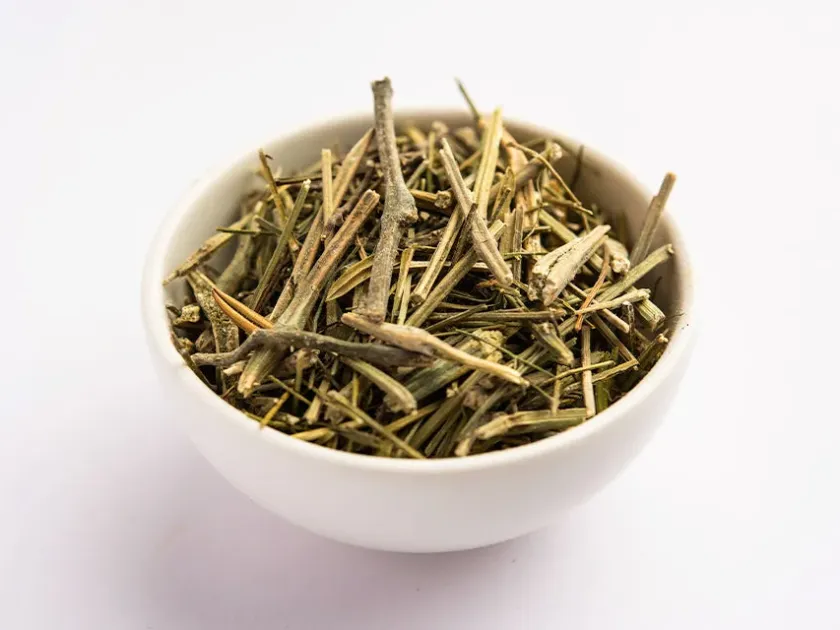
Properly dried material should exhibit a characteristic dark brown or greenish-brown color and a distinct bitter taste. The final product should have a moisture content not exceeding 10-12% to ensure stable long-term storage.
Storage is carried out in airtight containers kept in cool, dry conditions. As a valuable resource, Swertia chirayita requires careful post-harvest handling to preserve its unique therapeutic properties.