
Yellow star anise
Illicium parviflorum Michx. ex Vent.
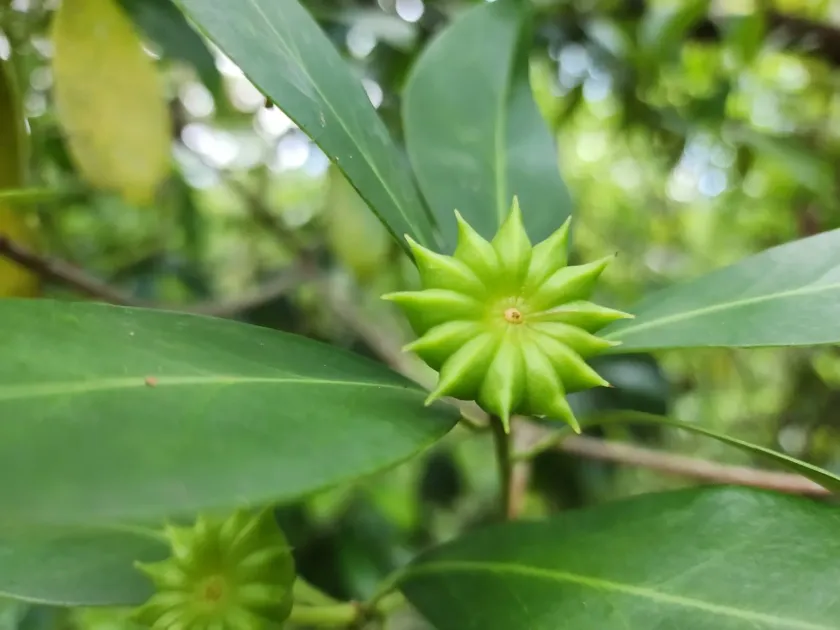
Description
Growing requirements
Yellow star anise (Illicium parviflorum) is an evergreen shrub belonging to the Schisandraceae family. Native to the southeastern United States, particularly Florida, it is commonly found in moist, shady environments near water bodies.
The plant thrives in partial shade or dappled sunlight. Full exposure to harsh afternoon sun often causes leaf scorch and reduces the plant's overall aesthetic appeal, making it essential to choose the planting site carefully.
Soil requirements for Illicium parviflorum include fertile, organic-rich, and well-drained loams. While the plant appreciates consistent moisture, it is prone to root rot if the soil remains waterlogged for extended periods.
In terms of climate, the species prefers a temperate to subtropical environment. It has moderate cold hardiness but requires protection from freezing winds in colder zones to prevent branch dieback and winter foliage damage.
Cultural practices include regular watering during dry spells and light annual pruning to maintain a dense, bushy form. Mulching around the base of the plant is recommended to preserve soil moisture and regulate ground temperature.
Main diseases and pests
Fungal leaf spot diseases are the primary health concern for yellow star anise, especially in conditions of poor air circulation and high humidity. Maintaining proper spacing between shrubs is crucial for disease prevention.
Common pests affecting this plant include scale insects and mealybugs. These sap-sucking pests often gather on the undersides of leaves or stems, causing yellowing and stunted growth if left untreated.
Root pathogens such as Phytophthora can pose a severe threat if the drainage is inadequate. Once infected, the plant often suffers from decline, necessitating careful monitoring of soil drainage conditions.
Aphids might appear on new spring growth, causing leaf curling. Control measures usually involve using horticultural oils or insecticidal soaps, which are effective while being relatively safe for the surrounding environment.
Good sanitation, such as removing fallen leaves and pruning away infected branches promptly, helps in reducing the inoculum pressure of pathogens and keeps the shrub in a vigorous and healthy state.