
Florida anise
Illicium floridanum Ellis
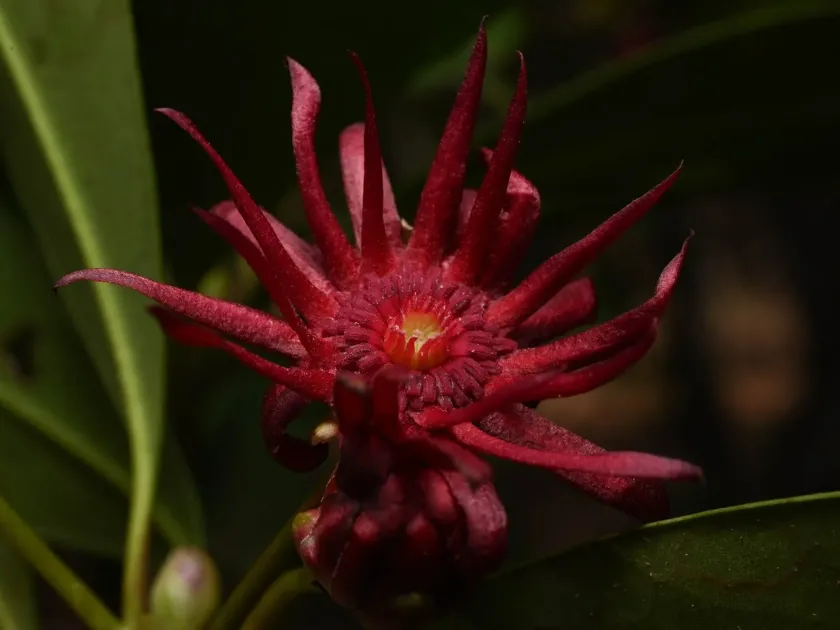
Description
Growing requirements
Florida anise (Illicium floridanum) is an evergreen shrub belonging to the Schisandraceae family. Native to the southeastern United States, it naturally thrives in damp, shaded environments, typically near stream banks and moist forest floors.
To cultivate this species successfully, one must provide a location with partial to full shade. While it can handle some dappled light, exposing the foliage to harsh direct sun often results in scorching and leaf drop.
The ideal soil for this plant is rich in organic matter, slightly acidic, and consistently moist. Proper drainage is essential, as the roots are susceptible to rot if they remain submerged in stagnant water for extended periods.
Climate requirements include protection from extreme cold. While hardy in certain zones, Florida anise prefers milder climates where winter temperatures do not consistently drop below its tolerance threshold, as severe frosts can damage the stems.
Cultural practices should focus on moisture management. Applying a layer of organic mulch around the base of the plant helps maintain soil temperature and moisture levels, mimicking the conditions of its native habitat.
Main diseases and pests
Florida anise is generally considered a low-maintenance shrub, largely because its aromatic leaves serve as a natural deterrent against many common garden pests, including deer and rabbits.
However, fungal diseases remain a primary concern, especially in areas with high humidity and poor air circulation. Powdery mildew can affect the leaves if the plant is crowded by other vegetation.
Root rot is the most significant physiological threat. It is almost always a result of poor soil structure or overwatering, which stresses the plant and leaves it vulnerable to soil-borne pathogens.
Occasional infestations of scale insects may occur, though these are typically localized. Pruning out infected branches and maintaining plant vigor is usually sufficient to control these minor outbreaks.
Gardeners should always exercise caution when working with this species, as all parts of the plant are considered toxic if ingested. Keep this in mind when selecting a site in gardens frequented by children or pets.