
Star anise
Illicium verum Hook. f.
Description
Sowing dates
Star anise is a perennial evergreen tree that is primarily propagated by seeds. Given that seeds lose their viability quickly due to high essential oil content, they should be sown immediately after harvesting.
In nursery conditions, seeds are planted in prepared soil beds with partial shade. The germination process is relatively slow and requires consistent moisture and warmth, usually between 22–25 degrees Celsius.
Seedlings require delicate handling and are usually kept in nurseries for up to two years before being transplanted into their permanent location in an orchard or plantation.
Weed control is essential during the early stages of growth, as young trees compete poorly with aggressive grasses and weeds. Mulching is highly recommended to preserve soil moisture.
Proper spacing between trees is crucial to allow the canopy to expand, as mature trees can reach significant heights and diameters under favorable environmental conditions.
Growing requirements
Star anise is a tropical species that thrives in warm, humid climates. It is highly sensitive to frost, which makes it suitable only for specific geographical zones with stable temperatures.
The ideal soil is rich in organic matter, slightly acidic, and well-drained. The plant cannot tolerate waterlogged soils, which quickly lead to root rot and tree decline.
Wind protection is necessary, especially for younger trees, as strong winds can cause physical damage to the leaves and break fragile branches during the fruiting season.
A consistent supply of water is required, particularly during the dry season. Drought stress during the development of fruit buds will significantly reduce the yield in the following season.
The tree prefers areas with partial shade, especially in its juvenile stage, as direct, intense tropical sun can scorch the leaves and inhibit optimal growth.
Yield
Star anise trees have a long lead time before they reach commercial maturity. Typically, a tree starts fruiting around 5–6 years, with full productivity attained between 10 and 15 years of age.
The yield per tree can range from 30 to 50 kilograms of dried fruit, depending on the tree’s age, health, and the management practices applied on the plantation.
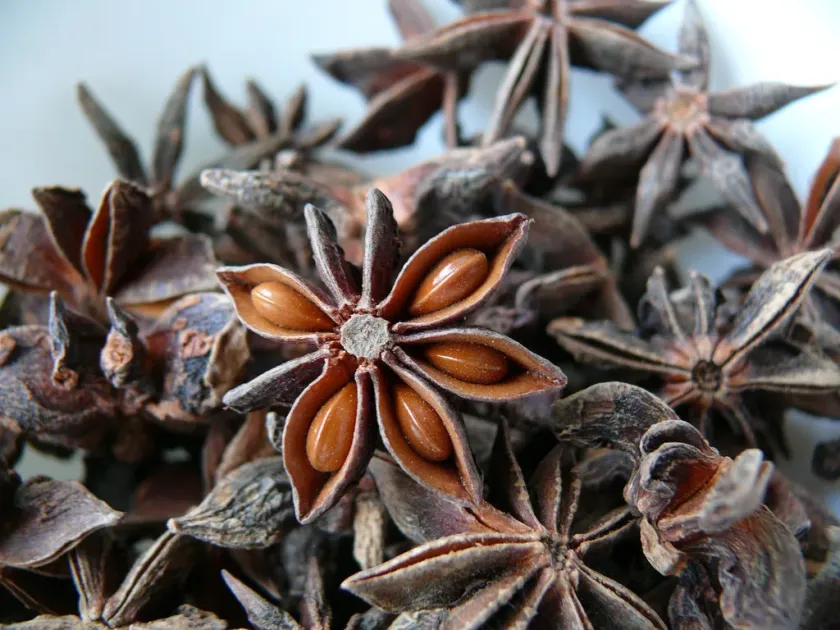
The fruit consists of eight-pointed star-shaped follicles. These follicles are the most valuable part of the plant, containing high concentrations of anethole, a key aromatic compound.
Regular pruning of dead wood and overcrowding branches helps maintain airflow throughout the canopy, which is essential for uniform fruit development and reducing disease incidence.
Yield management also involves careful monitoring of flower development to ensure that environmental conditions remain supportive of fruit set and maturation.
Main diseases and pests
Root rot caused by fungal pathogens is the most significant threat to star anise, particularly in plantations with heavy or poorly drained soils where water stands for long periods.
Leaf-eating insects and scale insects are common pests that colonize the tree and weaken its structural integrity. Regular scouting is required to prevent widespread infestations.
Fungal leaf spot diseases may appear in areas with high humidity and poor ventilation. Proper spacing and regular sanitation of the orchard are the best preventative measures.
Mites can also pose a threat during dry periods, causing yellowing and shedding of leaves, which reduces the photosynthetic capacity of the tree.
Integrated pest management, including biological controls, is preferred over synthetic pesticides to ensure that the final harvested spice meets safety standards for human consumption.
Harvesting
Harvesting star anise is a labor-intensive manual task. Workers must pick the fruits carefully to ensure they are fully developed but have not yet fully split open and released their seeds.
Once harvested, the fruits are spread out to dry in the sun or in controlled mechanical drying facilities. Proper drying is vital for maintaining the characteristic flavor and aroma of the spice.
The duration of the drying process must be carefully monitored to reach the target moisture content, which prevents mold growth during storage and transport.
After drying, the star-shaped follicles are sorted by size and physical integrity. High-quality whole stars command a premium price in the international trade market.
Sustainable harvesting techniques ensure the long-term health of the plantation, allowing for decades of consistent production from the same established orchard.