
Swainsona greyana
Swainsona greyana
Description
Growing requirements
Swainsona greyana is a perennial subshrub belonging to the Fabaceae family. This species is native to Australia, predominantly found in arid and semi-arid regions where it thrives under harsh climatic conditions.
The plant demonstrates excellent drought tolerance, utilizing a deep taproot system to access subsurface moisture. It requires well-drained soil types, such as sandy or loamy soils, to prevent root rot and ensure proper gas exchange.
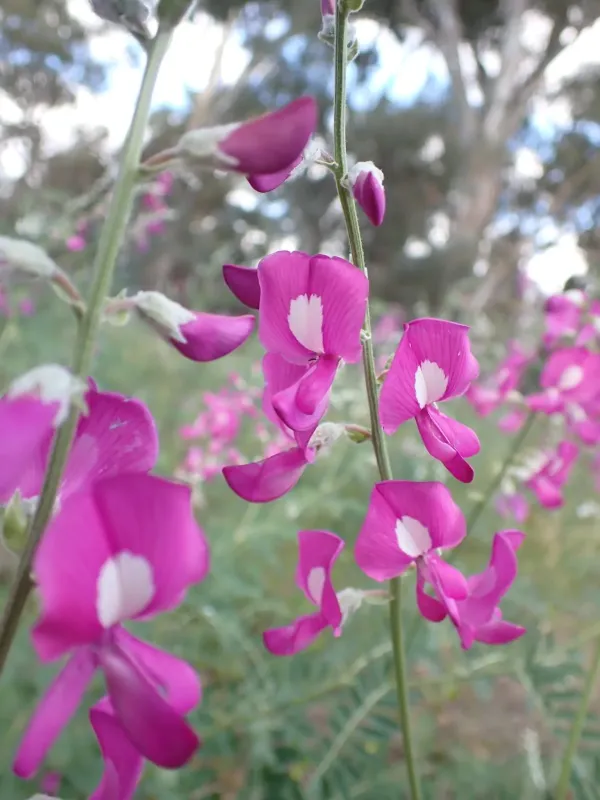
Botanically, the species is identified by its silvery-hairy foliage and long racemes of purple or pink pea-like flowers. Its fruits are characterized by inflated, bladder-like pods, which are a distinctive feature of the Swainsona genus.
Agronomically, this plant is suited for environments with high solar radiation and low atmospheric humidity. It is an nitrogen-fixing legume that can improve soil structure when managed in appropriate ecosystems.
The cultivation of this species requires minimal fertilizer input, as it is adapted to nutrient-poor soils. Proper spacing is essential to minimize competition for sunlight and limited soil resources in arid landscapes.
Main diseases and pests
The primary concern regarding the utilization of Swainsona greyana is its toxicity. The plant contains the indolizidine alkaloid swainsonine, which causes severe neurological disorders in livestock, commonly known as swainsonine poisoning.
Root diseases and pathogens, particularly soil-borne fungi, are the most frequent threat when the plant is grown in unsuitable, overly moist, or poorly drained conditions. These pathogens can rapidly lead to total plant loss.
Various insect pests, including larvae that bore into the seed pods, can significantly reduce reproductive success. These pests can be difficult to manage due to the plant's typical occurrence in remote, vast arid areas.
Viral infections transmitted by sap-sucking insects may occur, leading to stunted growth and leaf chlorosis. There is currently a lack of integrated pest management protocols specifically developed for this species.
Furthermore, in certain regions, the plant may exhibit invasive characteristics. Without strict monitoring, it could outcompete native forage species, leading to a reduction in the overall quality and safety of pasture land.