
Strombosia pustulata
Strombosia pustulata
Description
Growing requirements
Strombosia pustulata is an evergreen tree species belonging to the Olacaceae family. It is naturally found in the tropical rainforests of West and Central Africa, where it thrives in shaded and humid environments with deep, nutrient-rich soil profiles.
The plant requires a consistently warm tropical climate to prosper, as it cannot tolerate significant temperature fluctuations or prolonged dry spells. High humidity levels are essential for its physiological health, making it perfectly adapted to the rainforest understory and canopy layers.
Ideal soil requirements involve well-drained but moisture-retentive substrates rich in organic matter. The tree is frequently encountered in alluvial forests along riverbanks, where natural soil fertility supports its robust vertical growth and extensive root development system.
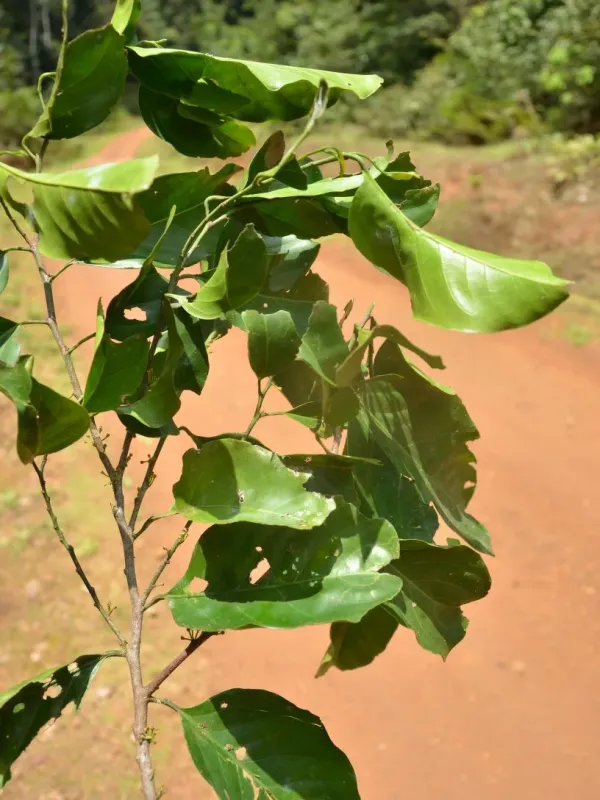
Botanically, the tree can reach heights of up to 30 meters. It is distinguished by its dense foliage and leaves that feature small pustule-like bumps on the surface, which serve as a primary identification marker for this specific species within the tropical ecosystem.
Economically, Strombosia pustulata is primarily recognized for its high-quality timber, known for its density and physical durability, which makes it suitable for various construction purposes. Furthermore, the tree holds cultural significance, as its bark is often utilized in traditional practices for its reputed medicinal properties.