
Streptocarpus wendlandii
Streptocarpus wendlandii
Description
Growing requirements
Streptocarpus wendlandii is a monocarpic herbaceous plant belonging to the Gesneriaceae family. Originating from South Africa, this species is naturally found growing in the shaded, humid crevices of rock faces, which dictates its specific environmental needs in cultivation.
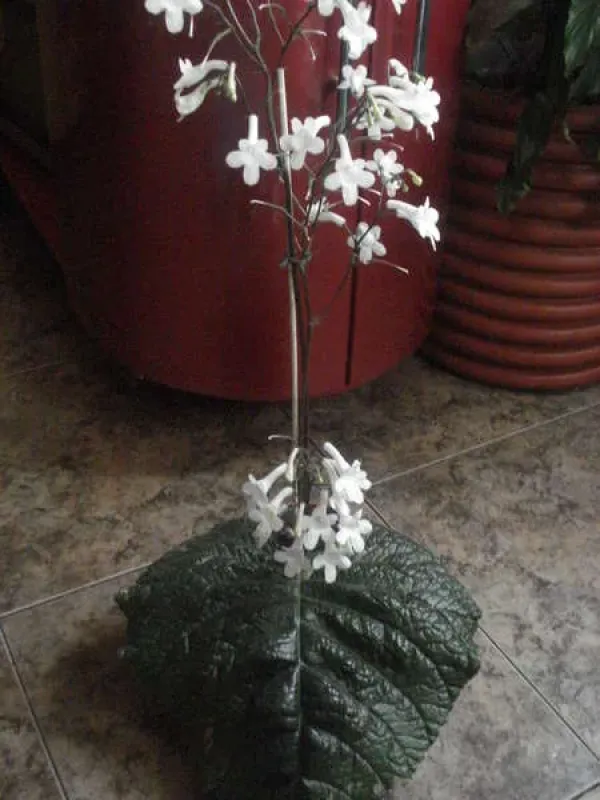
The defining botanical characteristic of this species is its single, massive leaf, which can grow up to 60–90 cm in length and 30–50 cm in width. During the flowering phase, a tall inflorescence emerges from the base of this single leaf, bearing numerous bell-shaped, violet-blue flowers.
The plant requires bright, indirect light. Direct sunlight is harmful and will cause severe scorching of the large leaf surface. An optimal temperature range is between 20–25 degrees Celsius, and the plant is highly sensitive to sudden temperature fluctuations and cold drafts.
For potting, a loose, airy substrate based on sphagnum peat moss with the addition of perlite or vermiculite is essential to ensure proper drainage. The soil pH should be slightly acidic, as this is crucial for the efficient uptake of nutrients by the root system.
Watering must be done carefully at the root zone or via the tray method. Water should never reach the center of the leaf rosette, as this quickly leads to crown rot. Maintaining ambient humidity of 60–70% is recommended, often achieved through tray systems with moist aggregate.
Main diseases and pests
Fungal diseases are the primary threat, often exacerbated by excessive soil moisture or poor air circulation. Powdery mildew and gray mold (Botrytis) can rapidly degrade the single, vital leaf, which typically results in the total loss of the plant.
Pests such as spider mites and mealybugs are major concerns. These insects thrive in conditions with low humidity and can cause significant leaf deformation, stunted growth, and a failure to produce flowers during the reproductive cycle.
Regular inspection of the underside of the leaf is necessary for early detection of pests. Maintaining good air movement around the plant helps mitigate the risk of both fungal outbreaks and insect colonization in indoor environments.
Root rot is a common issue resulting from waterlogged soil or poor drainage. Symptoms include a sudden loss of leaf turgor even when the soil appears moist, necessitating an urgent inspection of the roots and repotting into fresh, sterile growing medium.
Chemical control involving systemic fungicides and acaricides may be required if manual management fails. However, the most effective strategy for Streptocarpus wendlandii is the strict maintenance of an appropriate watering schedule and proper environmental hygiene.