
Heart-leaf twistflower
Streptanthus cordatus
Description
Growing requirements
The heart-leaf twistflower (Streptanthus cordatus) is a distinctive perennial herb belonging to the Brassicaceae family. It is native to the western United States, where it thrives in rocky, open slopes and arid mountain habitats, demonstrating remarkable environmental resilience.
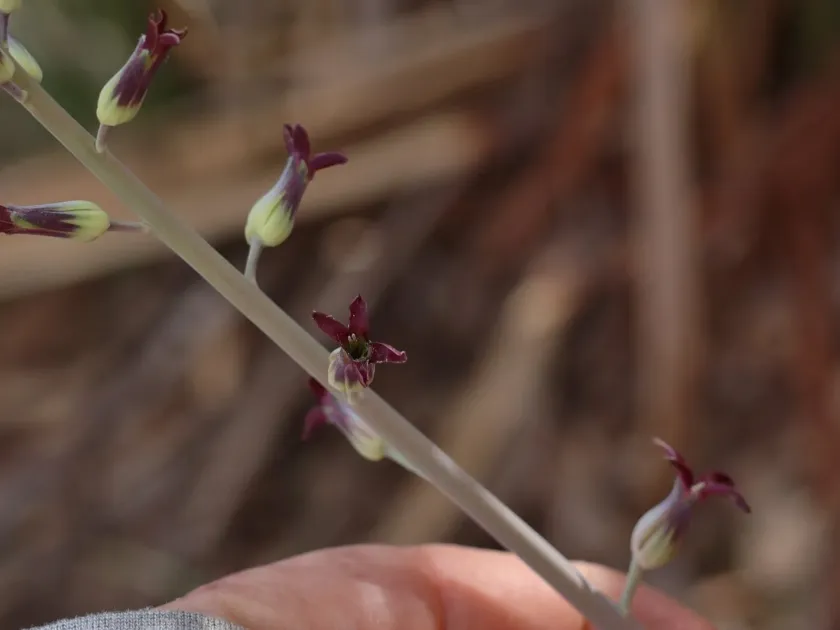
The plant is botanically recognized by its cordate leaves that wrap around the stem. Its inflorescences typically form racemes of colorful, urn-shaped flowers, which are well-adapted to attract specific pollinators while enduring the rigors of high-altitude climates.
Regarding soil requirements, this species demands exceptionally well-draining, rocky, or gravelly media. It does not tolerate heavy, clay-rich soils that retain moisture, as these conditions are lethal to its root system, often leading to rapid decay during the dormant season.
In terms of cultivation, the heart-leaf twistflower requires full sun exposure to maintain its compact habit and vibrant flowering. It is an ideal candidate for xeriscaping, as it maintains its physiological health even under severe moisture deficits due to its deep taproot system.
Its primary horticultural use is within native plant gardens and rockeries, where its unique architecture adds structural interest. It is valued by sustainable gardeners for its ability to persist in harsh conditions with minimal maintenance, irrigation, or fertilizer requirements.
Main diseases and pests
Fungal pathogens associated with overly humid environments present the most significant threat to this species. Preventive measures include ensuring an airy placement and strict drainage management to avoid water-logging.
Pest issues often include crucifer-specialized beetles and aphids, which may feed on young plant tissues. Regular observation of the foliage is recommended to manage infestations before they impact the plant's overall development.