
Streptanthus carinatus
Streptanthus carinatus
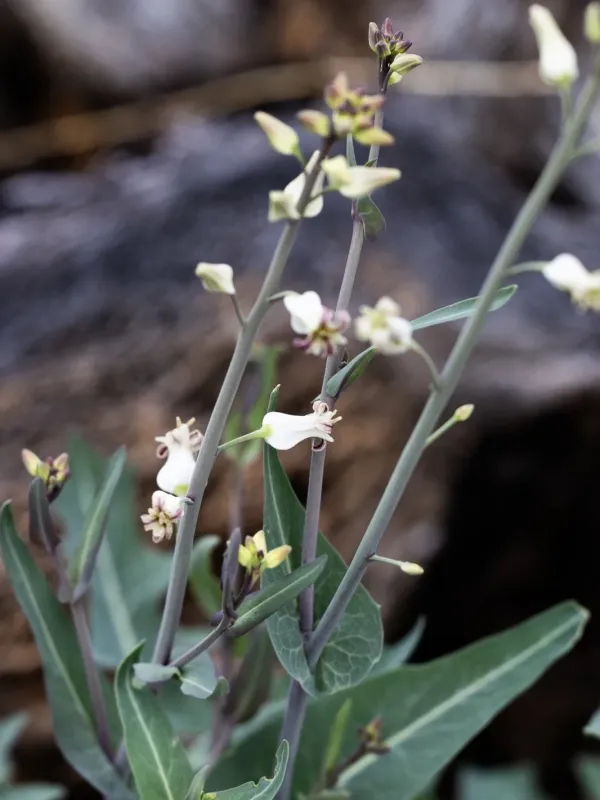
Description
Sowing dates
Streptanthus carinatus, commonly known as a member of the jewel flower group within the Brassicaceae family, is a herbaceous annual native to arid landscapes of North America. It is well-adapted to surviving in desert environments where rainfall is scarce and highly seasonal.
The plant features a distinct upright habit, with succulent-like foliage that serves as an adaptation to minimize transpiration. This botanical architecture allows the plant to thrive in regions characterized by high solar irradiance and significant diurnal temperature swings.
In modern agricultural and ecological contexts, this species is primarily valued for its role in restoring desert ecosystems and supporting native pollinator populations. Its ability to complete its life cycle during short windows of favorable moisture makes it an interesting subject for arid-land research.
Botanically, the plant produces elongated inflorescences with unique flower morphology that attracts diverse insect species. The development of deep taproots provides structural stability and access to deep-soil moisture reserves during peak heat.
Cultivation practices for this species are based on its ecological heritage. It requires environments that mimic its natural habitat, emphasizing minimal disturbance and the selection of sites with low organic matter but high mineral content.
Growing requirements
Successful growth of Streptanthus carinatus necessitates well-drained, sandy, or gravelly soils. The species is highly sensitive to waterlogging, which often leads to rapid deterioration of the root system and plant death.
The plant requires full sun exposure to maintain its structural integrity. Adequate sunlight is essential for the maturation of seeds and the overall health of the vegetative parts, preventing the etiolation commonly seen in low-light conditions.
Climatic requirements focus on a temperate spring growing phase followed by dry, warm conditions for reproductive development. Frost sensitivity is high, particularly during the flowering stage, necessitating careful planning of the sowing schedule.
Nutrient management should be conservative. Excessive fertilization, particularly nitrogen, often results in poor reproductive performance and increased susceptibility to environmental stress, rather than enhancing crop yield.
Soil pH levels should remain in the neutral range (6.5 to 7.5). Ensuring proper drainage and maintaining soil structure are more critical than chemical enrichment for this specific species.
Main diseases and pests
The primary agricultural pests affecting this plant are flea beetles, which can cause significant defoliation in young seedlings. Integrated pest management strategies are advised to keep populations below economic injury levels.
Fungal pathogens such as powdery mildew represent a significant threat during periods of high humidity or poor field ventilation. Managing plant density is a key cultural practice to mitigate these disease risks.
Root-borne pathogens can become problematic if the soil moisture regime is poorly managed. Prevention relies on avoiding over-irrigation and maintaining the dry cycle typical of the plant's native climate.
Weed pressure remains a major competitor during the early vegetative stage. Effective weed control in the first few weeks after emergence is vital to ensure the crop establishes a strong enough foundation to withstand later conditions.
While less common, some lepidopteran larvae may feed on the leaves. Monitoring programs should focus on early detection to avoid the need for broad-spectrum insecticides, which could harm pollinators attracted to the blooms.