
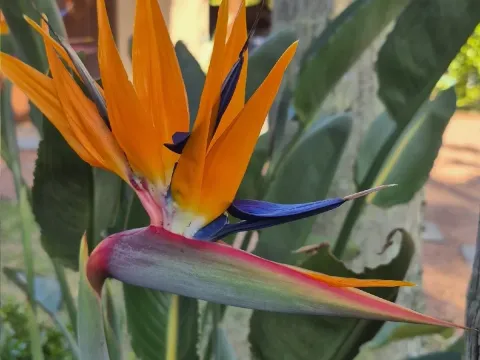
Strelitzia
Strelitzia
Propagation of Strelitzia is primarily achieved through seeds or vegetative division of the root clump. Seeds must be sown immediately after harvesting, as they lose viability very quickly.
What the section contains


Strelitzia
A light substrate composed of peat and sand should be used for germination, while maintaining a constant temperature between 22–25°C. High humidity and regular ventilation are essential during this early development stage.
Germination is often uneven and may take from several weeks to a few months. Seedlings require bright, indirect light to ensure steady development and prevent leggy growth.
Young plants should be repotted using the transfer method to protect the sensitive root system. Overly large containers at the seedling stage are discouraged, as they may hinder the development of the foliage.
Vegetative division of mature specimens is best performed in spring after the blooming season, carefully separating the rhizome into segments that contain healthy growth points.
Strelitzia, belonging to the Strelitziaceae family, originates from South Africa. It thrives in bright, indirect light, though it can tolerate some morning sun in a controlled environment.
The plant requires a specific temperature regime: 20–25°C during the growing season and 14–16°C during the dormant phase. Fluctuations in temperature can inhibit the development of flower buds.
The soil must be fertile, well-draining, and slightly acidic or neutral. Stagnant water around the roots is highly detrimental and frequently leads to severe root rot.
Irrigation should be consistent but moderate, allowing the top layer of soil to dry out between waterings. Humidity levels should be kept at 60–70% through regular misting.
During the active growing phase, fertilize the plants bi-weekly with balanced nutrients, focusing on potassium and phosphorus to promote vibrant flower production.
The commercial use of Strelitzia is primarily focused on the production of high-quality cut flowers for the global floristry market. The plant is prized for its unique, architectural bird-like inflorescences.
In professional greenhouse settings with optimal light and temperature management, a healthy mature plant can produce between 5 and 15 flower stalks annually.
Commercial productivity peaks between the fourth and sixth year of the plant's life. A standard market-grade flower stalk should be sturdy and measure at least 60–80 cm in length.
Harvested flowers require specialized post-harvest storage at 8–10°C, which allows for extended transport and a vase life of up to three weeks for the end consumer.
Economic viability depends on planting density; generally, 3–4 plants per square meter is the recommended ratio to ensure sufficient air circulation and light penetration.
The main pests affecting Strelitzia are scale insects, spider mites, and mealybugs. These thrive in environments with low humidity and poor ventilation.
Root rot is the most serious disease, usually caused by improper watering techniques or heavy, waterlogged soil conditions. It is a common cause of total plant loss in nurseries.
Fusarium wilt may occur, characterized by leaf yellowing and necrotic spotting on the stems. Strict sanitation of tools and substrate is required to prevent widespread infection.
- Regular monitoring for signs of spider web or scale infestations.
- Immediate isolation of infected plants to protect the rest of the crop.
- Sanitation of dead plant material to minimize fungal pathogen buildup.
Effective management of these threats is critical for maintaining commercial profitability, as the plant is slow-growing and expensive to replace once damaged.