
Stapelia leendertziae
Stapelia leendertziae
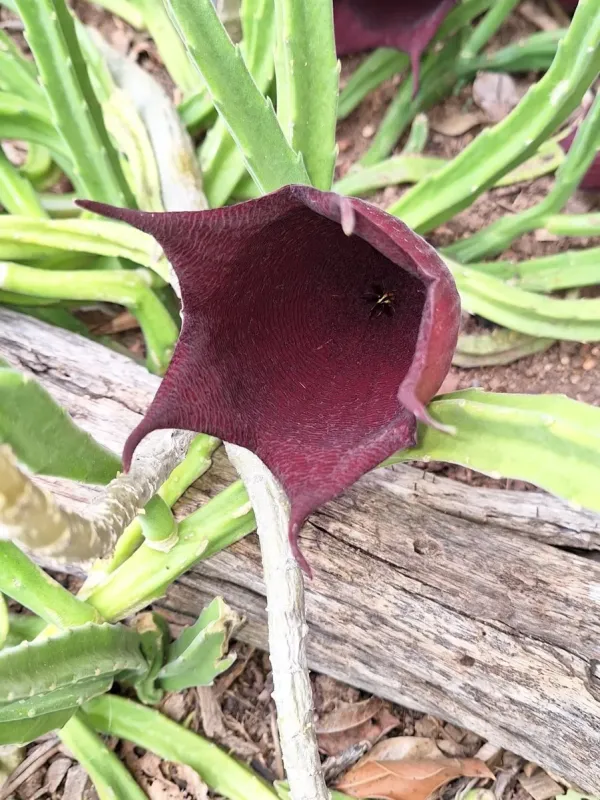
Description
Growing requirements
Stapelia leendertziae is a perennial succulent belonging to the Apocynaceae family. Native to the arid regions of South Africa, this species is well-adapted to surviving in harsh environments with minimal resources.
The plant features short, fleshy, four-angled stems that form dense clumps. Its most distinct botanical characteristic is the unique, bell-shaped, deep-purple flower that emits a specific odor to attract pollinators in its native habitat.
For successful growth, provide the plant with bright, indirect light. While it loves sunshine, intense afternoon sun can scorch the stems, so filtered light is preferable. Keep the temperature between +22°C and +28°C during the active growing season.
Soil requirements are strict regarding drainage. A gritty, porous medium is essential. A standard commercial succulent mix amended with extra pumice or perlite will ensure that the roots do not sit in stagnant water, which is critical for health.
Watering should be approached with caution. During the growing months, allow the soil to dry out completely before deep watering. During the winter dormancy, withhold water almost entirely to simulate the natural dry season of the plant's origin.
Main diseases and pests
The most significant threats to Stapelia leendertziae are fungal pathogens, specifically those causing root and stem rot. These are primarily caused by overwatering or poor air circulation around the root zone.
Pests, such as mealybugs and spider mites, are common nuisances. Infestations typically occur in dry, poorly ventilated conditions. Regular monitoring and prompt treatment with horticultural soap or systemic insecticides are recommended to maintain plant health.