
Giant toad plant
Stapelia gigantea
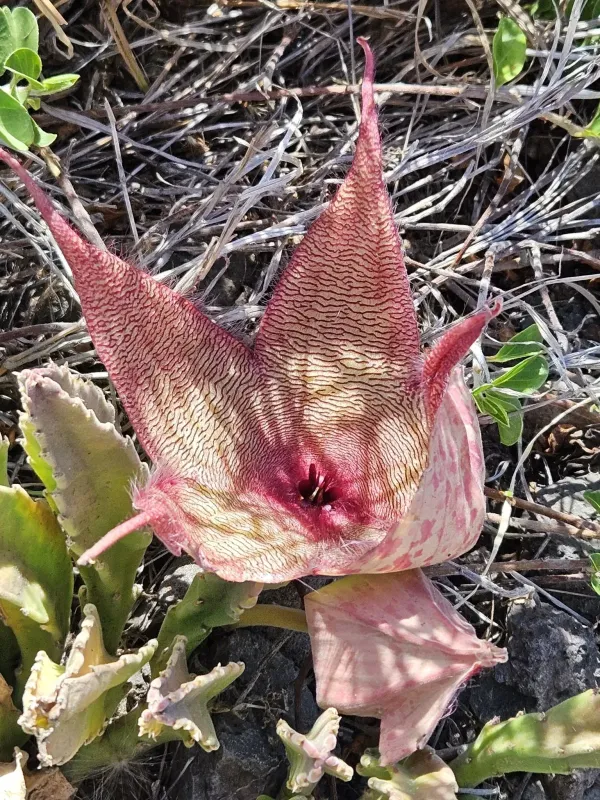
Description
Growing requirements
The Giant toad plant (Stapelia gigantea) is a succulent perennial belonging to the Apocynaceae family. Native to the arid regions of Southern Africa, it is widely prized by collectors for its oversized, carrion-scented flowers.
Botanically, the plant consists of thick, hairless, four-angled stems that act as water reservoirs. It does not produce leaves, relying instead on its photosynthetic stem tissue for energy production.
Cultivation requires bright, indirect light. While it tolerates some morning sun, exposure to harsh afternoon rays in warmer climates can cause tissue scorch and permanent damage to the epidermis.
Regarding soil requirements, the plant demands excellent drainage. A gritty, mineral-based substrate containing pumice, perlite, and coarse sand is essential to prevent root asphyxiation during wet periods.
Temperature management is key to growth. During the active growing season, standard indoor temperatures are ideal. In winter, keeping the plant cooler (12–15 degrees Celsius) helps induce dormancy and promotes flowering.
Main diseases and pests
The most common pest is the mealybug, which thrives in the crevices between stem ribs. Manual removal or systemic insecticides are required to manage infestations effectively.
Root rot is the primary physiological threat, typically caused by overwatering or poor drainage. It presents as localized softening and discoloration of the stems near the soil surface.
Spider mites can occur if the plant is kept in an environment with extremely low humidity and high heat. Regular inspection of the plant's surface is recommended to ensure early detection.
Fungal infections can develop if water accumulates on the stems, especially during cloudy weather. Keeping the foliage dry and maintaining good ventilation is the best preventative strategy.
To ensure long-term health, avoid over-fertilizing with high-nitrogen formulas. Succulents prefer a balanced, low-concentration fertilizer during the summer months to maintain structural integrity.