
Stapelia hirsuta
Stapelia hirsuta
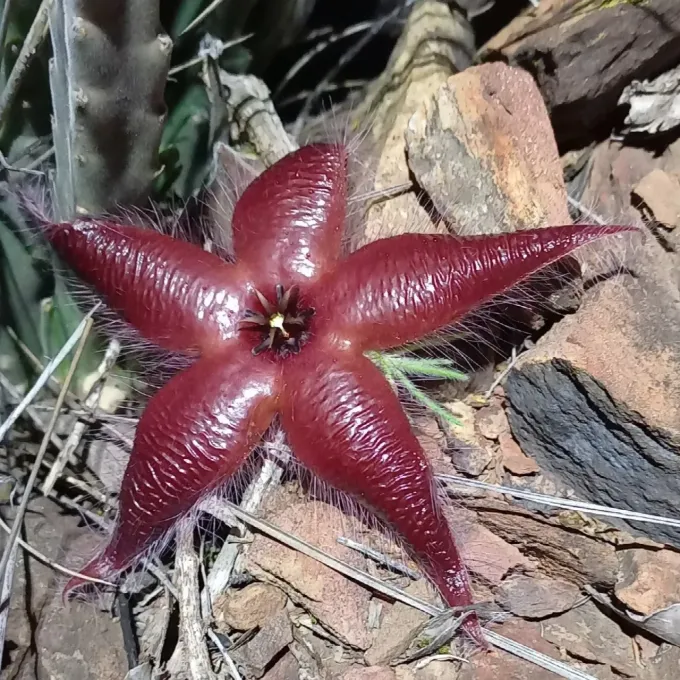
Description
Growing requirements
Stapelia hirsuta is a succulent perennial plant belonging to the Apocynaceae family. Native to the arid regions of Southern Africa, it has evolved to thrive in rocky soils and harsh, dry climatic conditions.
The plant requires bright, indirect sunlight to maintain its structural integrity and health. While it is a succulent, direct exposure to intense midday sun in hot climates may cause epidermis scorching and tissue damage.
Optimal growth occurs at temperatures ranging between 22–26 degrees Celsius during the active growing season. A cooler dormant period with temperatures around 12–15 degrees Celsius is essential for the plant to set flowers.
Regarding soil requirements, Stapelia hirsuta demands a porous, well-draining substrate. A mix specifically formulated for cacti and succulents, enriched with perlite or coarse sand, is ideal to prevent root asphyxiation.
Watering management is the most important aspect of its husbandry. The substrate must be allowed to dry out completely between waterings to mimic the natural hydration cycles of its native South African habitat.
Main diseases and pests
The primary agricultural threat to this species is root rot caused by poor soil drainage and overwatering. Excess moisture in the soil column promotes the growth of opportunistic fungi that quickly decay the root system.
Mealybugs are the most persistent pests affecting Stapelia hirsuta. They cluster in the recesses of the succulent stems, feeding on sap and often leaving behind a powdery white secretion that attracts secondary infections.
Spider mites can become a significant issue, particularly in environments with low air humidity. These pests feed on the cell sap, resulting in discolored, unsightly patches on the skin of the plant.
Control strategies involve the application of appropriate acaricides and systemic insecticides. Integrated pest management should also include physical removal of colonies using alcohol-dipped swabs for immediate mitigation.
Maintaining good airflow around the plant and avoiding overhead irrigation are effective preventive measures against both fungal diseases and pest outbreaks, ensuring the long-term vitality of the succulent.