
Stapelia grandiflora
Stapelia grandiflora
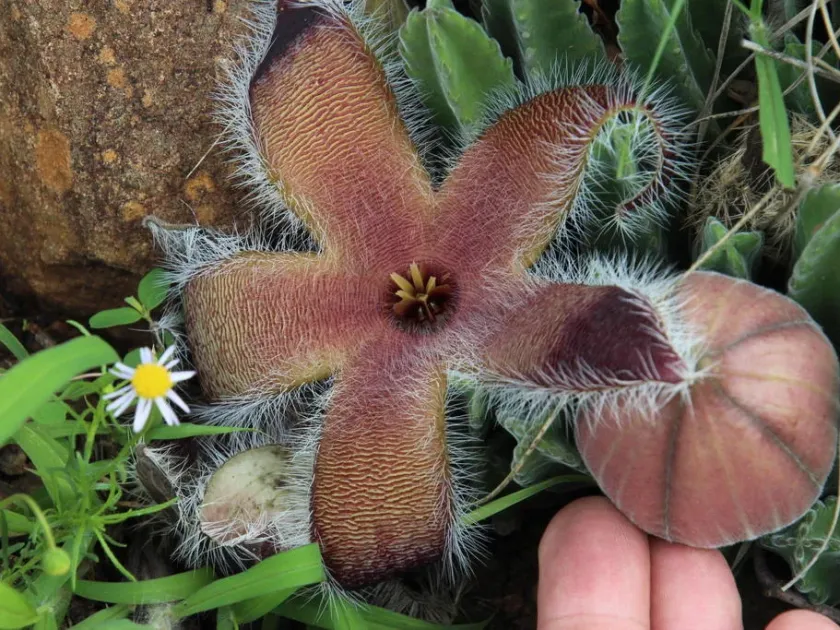
Description
Sowing dates
Stapelia grandiflora is typically propagated by stem cuttings, which is the most reliable method to maintain the unique characteristics of this succulent species.
The best time for taking cuttings is late spring or early summer when the plant is in its active growth phase, ensuring faster root development.
After cutting a section of the stem, it is crucial to allow it to air-dry in a shaded place for several days until a callus forms over the cut area.
The cuttings should be planted in a well-draining succulent potting mix, providing stable support for the emerging root system.
Minimal watering is required initially to encourage root growth without causing the succulent stems to rot in the moist soil environment.
Growing requirements
Stapelia grandiflora belongs to the Apocynaceae family and is native to the arid regions of Southern Africa, where it has adapted to dry climates.
This species requires a bright, indirect light source to thrive; direct sunlight may be acceptable in limited amounts but can damage the epidermis.
The growing medium must be highly porous, typically composed of peat, coarse sand, and perlite, to ensure that water drains away from the roots instantly.
During the growing season, moderate watering is necessary, while the winter period necessitates a dry resting phase to prevent fungal outbreaks.
Temperature control is essential, with ideal daytime temperatures ranging from 20 to 26 degrees Celsius and cooler nights being beneficial for plant health.
Main diseases and pests
The primary threat to this culture is root rot, caused by overwatering or poor drainage that leaves the soil permanently waterlogged.
Mealybugs are the most common pests that affect Stapelia grandiflora, often hiding in the crevices of the ribbed stems and sapping the plant's vitality.
Spider mites may also pose a risk in low-humidity conditions, causing discoloration and structural weakness in the succulent stems.
Effective management involves utilizing horticultural oils or specialized insecticides to eliminate pests while maintaining strict environmental conditions.
Preventative measures include maintaining adequate air circulation and ensuring that the plant is not overcrowded, which helps to mitigate disease pressure.