
Spathiphyllum hybrids
Spathiphyllum hybrids
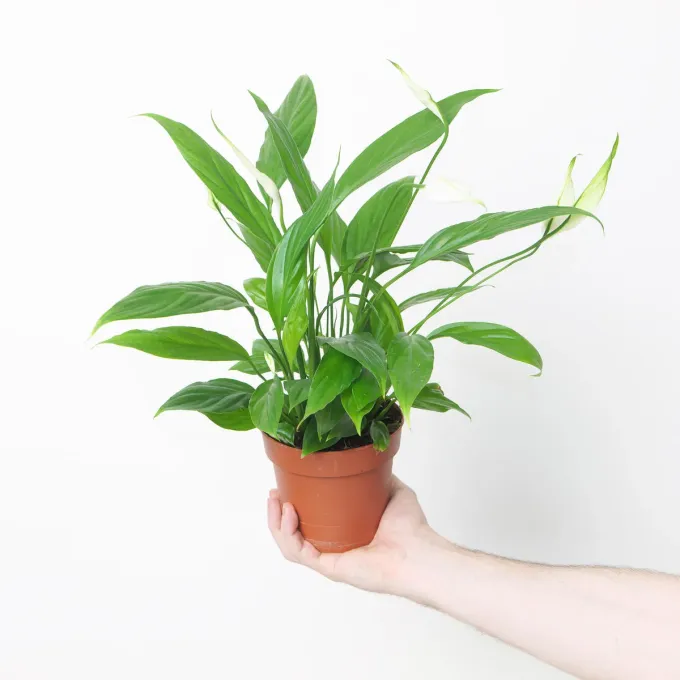
Description
Growing requirements
Spathiphyllum hybrids belong to the Araceae family and represent a diverse group of selected cultivars designed for enhanced ornamental appeal and indoor adaptation. They are perennial herbaceous plants characterized by dark green foliage and prominent white spathes.
Originating from the tropical regions of the Americas, these plants naturally thrive in forest understories, which dictates their agronomic need for indirect, filtered light rather than direct sunlight exposure.
Cultivation requires a well-draining, peat-based potting mix that retains moisture while ensuring optimal aeration for the roots. It is essential to maintain high relative humidity to prevent leaf tip necrosis.
The optimal temperature range for these hybrids is between 20°C and 28°C. During the growing season, plants should be fed with a balanced liquid fertilizer to support continuous development and robust inflorescence production.
As a key ornamental crop, Spathiphyllum is widely cultivated for the indoor plant market, valued for its air-purifying properties and its ability to bloom effectively under standard interior conditions.
Main diseases and pests
The primary pests affecting these crops include spider mites, mealybugs, and scale insects, which proliferate quickly in low-humidity environments often found in office settings.
Fungal pathogens such as Cylindrocladium spathiphylli often cause severe root rot and leaf blight if the growing medium remains waterlogged or cold for extended periods.
Integrated pest management (IPM) is recommended, focusing on maintaining stable moisture levels and implementing preventative fungicide treatments during high-risk humid conditions.
Sanitation practices, including the removal of yellowing leaves and debris from the base of the plant, are crucial to reducing the inoculum of fungal spores in a greenhouse environment.
When chemical interventions are required, growers should utilize systemic insecticides that are specifically labeled for use on greenhouse ornamentals to avoid phytotoxicity.