
Spathiphyllum cannifolium
Spathiphyllum cannifolium
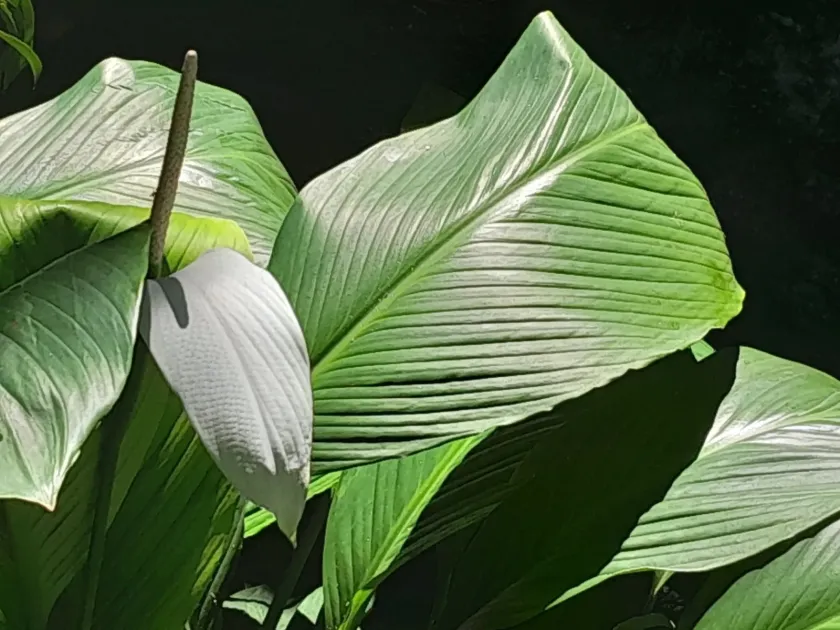
Description
Growing requirements
Spathiphyllum cannifolium is a perennial ornamental species belonging to the Araceae family. Originating from the tropical rainforests of South America, this plant is well-adapted to high-humidity, shaded environments with stable tropical temperatures.
The plant is characterized by its large, leathery, elliptic leaves that exhibit prominent veins, closely resembling those of a Canna plant. Its inflorescence consists of a spadix sheltered by a fragrant, greenish-white spathe, making it highly valued in the nursery industry.
Agronomic success requires a consistent temperature range between 18°C and 25°C. It is intolerant of cold drafts and sudden thermal fluctuations, which can cause significant stress to the plant and inhibit its flowering cycle.
The ideal substrate must be loose, airy, and well-draining. A mix consisting of peat moss, pine bark, perlite, and a portion of high-quality compost provides the necessary structure to support root development while preventing waterlogged conditions.
Hydration management is critical; the medium should be kept consistently moist but never saturated. In professional cultivation, the use of automated drip irrigation and humidity monitoring systems is recommended to maintain optimal growth metrics.
Main diseases and pests
Spider mites are common pests in greenhouse conditions, particularly when the ambient humidity drops. Integrated pest management, including biological controls or targeted miticide applications, is essential to maintain foliage health.
Mealybugs can cluster in the leaf axils, sucking sap and weakening the plant. Manual removal combined with systemic insecticide treatments is effective for localized infestations in a professional production setting.
Phytophthora root rot remains the most significant threat to the crop, often introduced through contaminated water or substrate. Strict adherence to sanitation protocols and the use of fungicide drenching are necessary for disease prevention.
Cercospora leaf spot occurs in environments with poor air circulation and excessive foliage wetness. Ensuring proper spacing between plants and maximizing air exchange helps to mitigate the risk of fungal proliferation.
Nutritional deficiencies, specifically nitrogen or iron, can cause chlorosis. Regular monitoring of pH levels, ideally kept between 5.5 and 6.5, ensures optimal nutrient availability and prevents yellowing of the leaf tissue.