
Solandra longiflora
Solandra longiflora
Description
Growing requirements
Solandra longiflora is a robust woody vine belonging to the Solanaceae family, native to tropical regions of Central and South America. Recognized for its vigorous growth, it serves as a prominent ornamental climber in conservatory settings and tropical landscape designs.
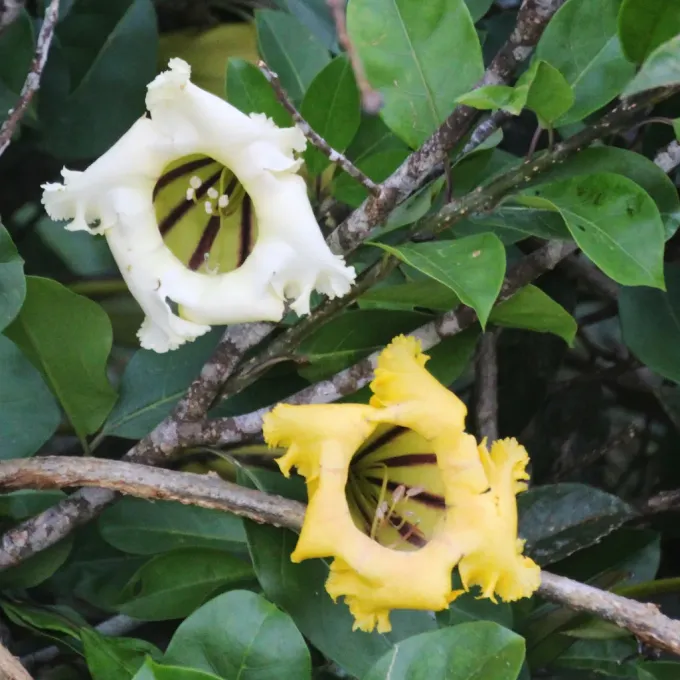
Botanically, the species is characterized by its large, trumpet-shaped flowers and thick, glossy leaves. The stems of this vine are capable of reaching considerable lengths, requiring sturdy supports for proper development and structural integrity in any agricultural or landscaping application.
Climatic requirements for Solandra longiflora are strict; it thrives in warm, humid conditions and is highly sensitive to frost. In temperate climates, it is cultivated in greenhouses or as a container plant that must be moved indoors during the colder months to ensure survival.
Soil management involves providing a well-draining, nutrient-rich medium with a slightly acidic to neutral pH. A mix of organic compost, perlite, and coarse sand is typically recommended to promote healthy root aeration and prevent waterlogging, which the species does not tolerate.
The primary utility of Solandra longiflora lies in its ornamental value. It is widely used for vertical garden structures, covering large walls or fences in frost-free environments, and enhancing the aesthetic appeal of botanical gardens and specialized interior spaces.
Main diseases and pests
Common pests affecting Solandra longiflora include spider mites, whiteflies, and scale insects. These pests often thrive in controlled indoor environments with low humidity, necessitating regular inspection of foliage to mitigate infestations.
Fungal issues such as root rot are primarily caused by excessive soil moisture and poor drainage. Ensuring the substrate dries out sufficiently between waterings is a critical management strategy to maintain plant health and prevent decay.
Leaf spot infections may occur under conditions of high humidity combined with insufficient air circulation. Proper spacing of plants and adequate ventilation in greenhouses are essential cultural practices to reduce the incidence of these fungal pathogens.
Integrated pest management (IPM) techniques, including the use of neem oil or systemic insecticides, are effective in controlling outbreaks. Growers should adhere to safety protocols when applying treatments, especially in enclosed environments.
Ongoing maintenance, including the removal of dead or diseased biomass and regular monitoring for signs of stress, ensures the longevity of the plant. A proactive approach to plant health is necessary for this species to reach its full ornamental potential.