
Russian houseleek
Sempervivum ruthenicum
Description
Growing requirements
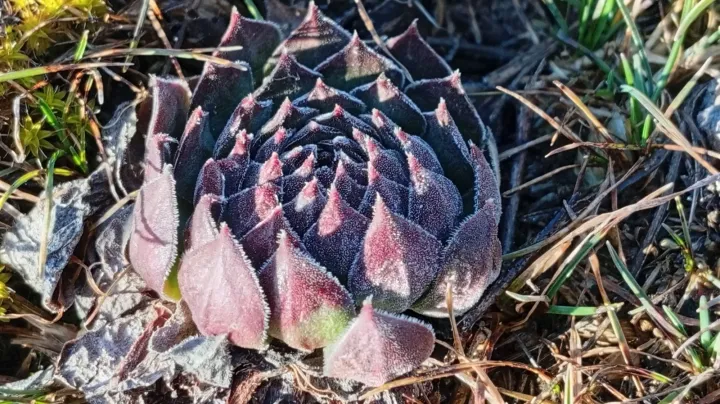
Russian houseleek (Sempervivum ruthenicum) is a perennial succulent plant belonging to the Crassulaceae family. It is characterized by dense rosettes of fleshy leaves that serve as a specialized mechanism for water storage, allowing the plant to thrive in harsh, arid environments.
Its natural range extends across Eastern Europe, inhabiting stony slopes, rocky outcrops, and dry steppe zones. The plant has evolved to survive in nutrient-poor soils, making it an excellent candidate for xeriscaping and sustainable gardening practices where water conservation is a priority.
In terms of environmental needs, this species demands full sun exposure to maintain its compact growth form and coloration. Well-drained, porous soil is critical for its health; heavy, water-logged soils must be avoided as they lead to root rot and other physiological stressors.
Cultivation of Sempervivum ruthenicum requires minimal effort. It is exceptionally hardy, capable of withstanding extreme temperature fluctuations throughout the year. Fertilization is rarely needed, as the plant prefers leaner conditions and may become leggy or susceptible to pests if overfed with nitrogen.
Host-plant utility is primarily centered on ornamental horticulture. It is frequently utilized in rock gardens, green roofs, and dry border plantings due to its low-maintenance nature. Propagation is typically achieved through the division of offsets or "pups" produced by the mother rosette.
Main diseases and pests
The most significant threat to the Russian houseleek is fungal infection resulting from improper soil moisture management. Root and crown rot are common if the drainage is insufficient, especially during periods of high humidity or excessive winter moisture.
Pest pressure is generally low for this succulent, though slugs and snails may graze on leaves during moist conditions. In some instances, sap-sucking insects like aphids can infest the inflorescences, but these cases are typically minor and easily managed with standard horticultural practices.