
Mountain houseleek
Sempervivum montanum
Description
Growing requirements
Mountain houseleek is a perennial succulent plant belonging to the Crassulaceae family. It is native to the mountainous regions of Central and Southern Europe, where it grows in rocky fissures.
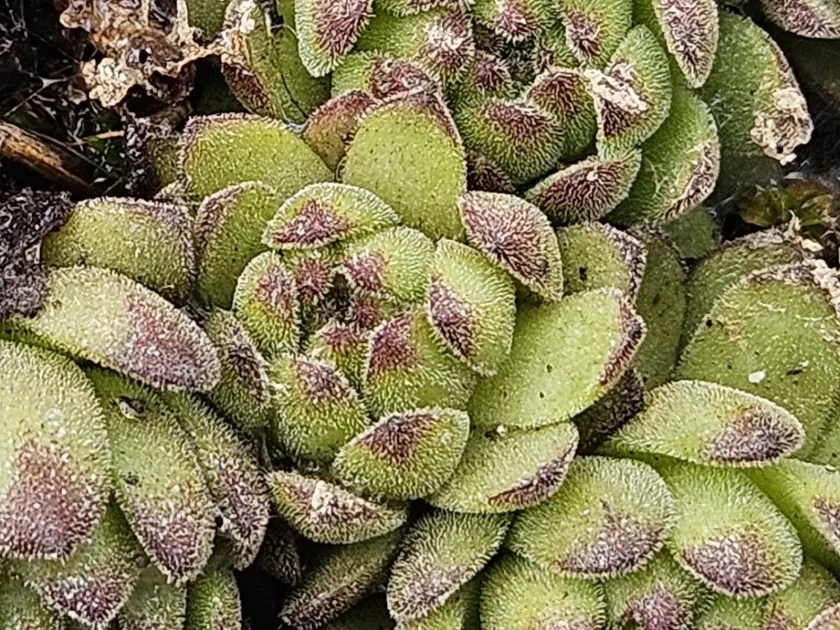
The plant is characterized by its compact, rosette-forming structure. The leaves are fleshy, lanceolate, and usually covered with fine glandular hairs, which help the plant retain moisture.
To successfully cultivate this species, one must provide a well-draining, gritty, or sandy substrate. It does not tolerate rich or heavy organic soils, which can cause the roots to suffocate.
Mountain houseleek thrives in full sun exposure. While it is highly cold-hardy, the most important aspect of its environment is the prevention of winter wetness, which can kill the rosettes.
Its primary use is ornamental. It is widely utilized in rock gardens, scree beds, and as a specialized plant for vertical greening projects or dry stone wall landscaping.
Main diseases and pests
The primary threat to the health of Mountain houseleek is excess moisture. Waterlogged soil quickly leads to crown rot and systemic root decay, which are often fatal to the rosettes.
Fungal diseases like Botrytis or various forms of root rot are prevalent when the plants are grown in poor light or inadequate ventilation conditions.
Pests such as mealybugs or root aphids can infest the plants. These pests feed on the plant sap, leading to stunted growth and yellowing of the succulent leaves.
Mollusks, including snails and slugs, are significant pests that find the succulent leaves highly palatable, leaving visible holes and damage to the rosettes.
Cultural control, such as top-dressing with gravel to keep the foliage away from soil moisture, is the most effective strategy for maintaining plant health and vigor.